
Classical Oriental Style
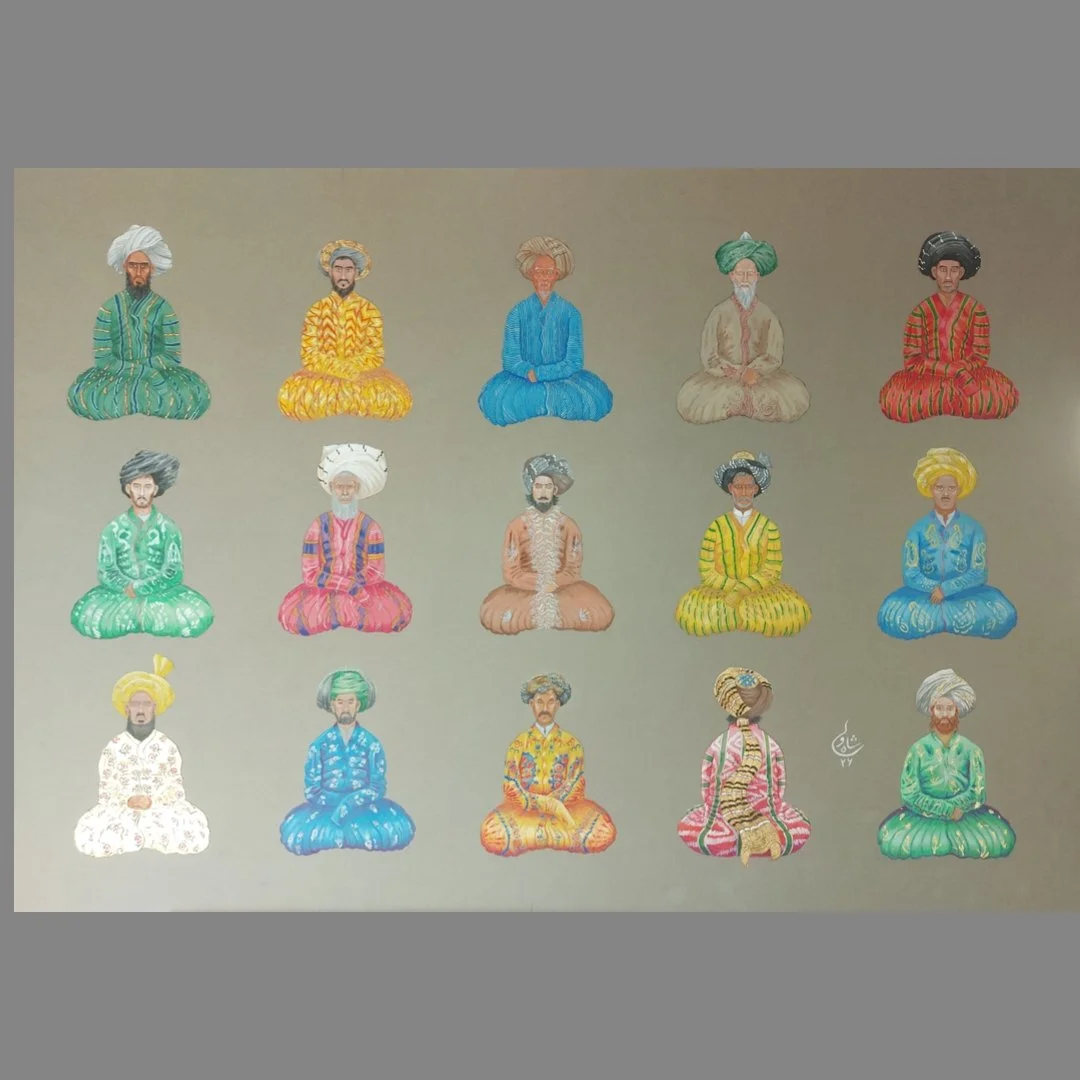
Gouache & 24k gold leaf on grey mount board
Unframed dimensions: 84cm x 60cm (A1)
Frame dimensions: 98cm x 73.5cm
£1,700 including frame and p&p from Thailand
This painting took me just over 2 weeks to complete, due to the level of detail involved.
Each of the figures measures around 15.5 cm in height.
Heavily influenced by my time in Afghanistan, this painting displays the colour and sartorial elegance of the Afghans, as well as their diversity in physical appearance. I have aimed to depict characteristics typical of ethnic Pashtuns, Hazaras, Turkmen, Uzbeks, Tajiks, Qizilbash, Nooristanis, Pashais, Seyyeds and Arabs - all of whom may call themselves Afghans.
The striking chapan coat is popular in northern Afghanistan and Central Asia, and I have used a bit of artistic licence by incorporating elements from traditional Indo-Persian miniature paintings. The turbans show the different styles and colours one sees around Afghanistan.
However...One of the coats in this painting is not, in fact, a chapan. Can you spot it?
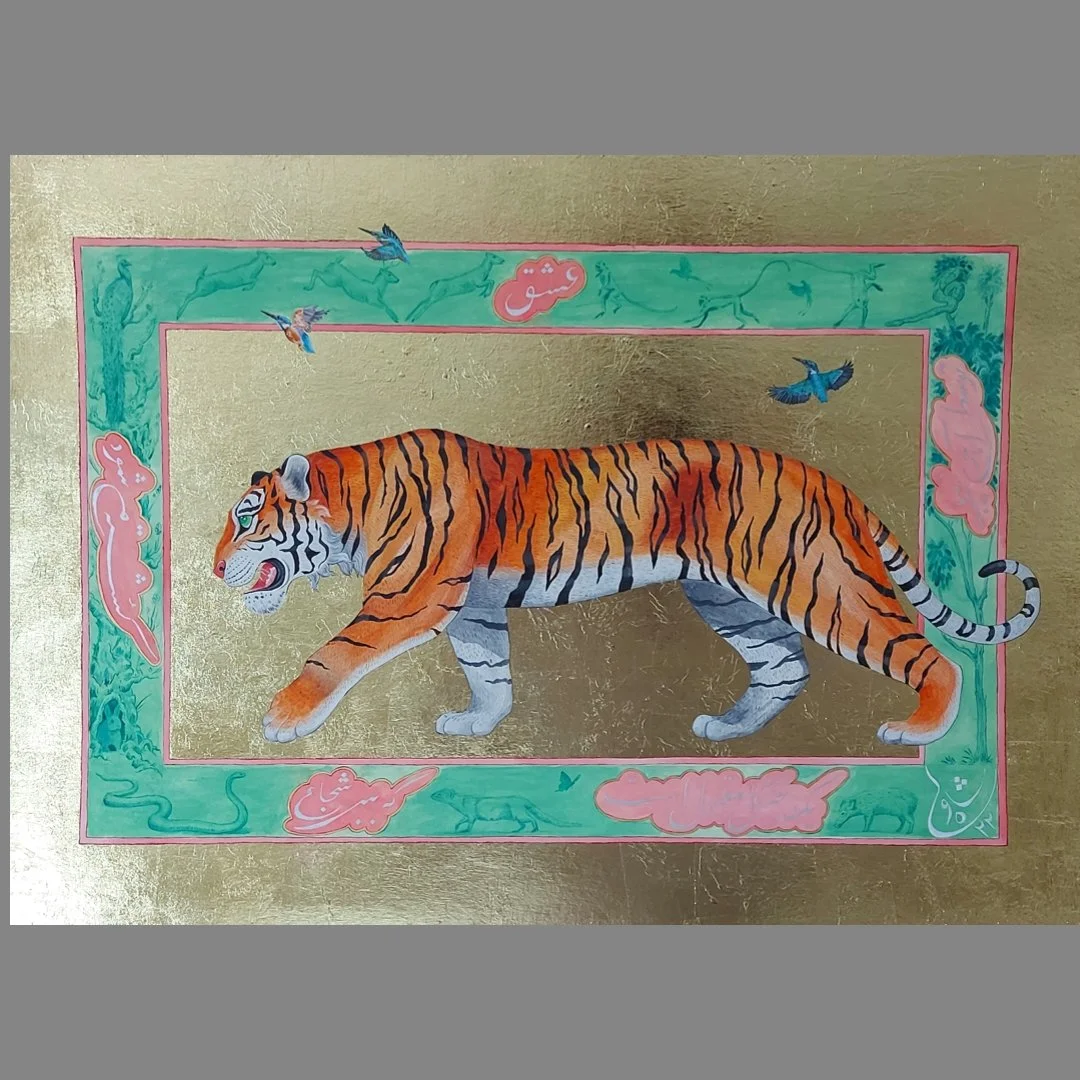
Gouache, acrylic and gold leaf on board
59.4cm x 42 cm (A2)
A Bengal tiger prowls through a background of gold leaf, accompanied by kingfishers and a border of a Snaffles-inspired remarque depicting various animals of the jungle...How many can you identify?
The Persian calligraphy, in silver ink, reads:
“Love is a beautiful forest, where the brave tiger is slain by the pretty deer”
This work draws inspiration from the “tazheeb” guilding traditions of Indo-Persian miniatures, whilst evoking the nostalgia of Kipling’s “The Jungle Book”, to create a piece distinctively Shah Wali. The painting’s dimensions ensure an eye-catching impact in any room.
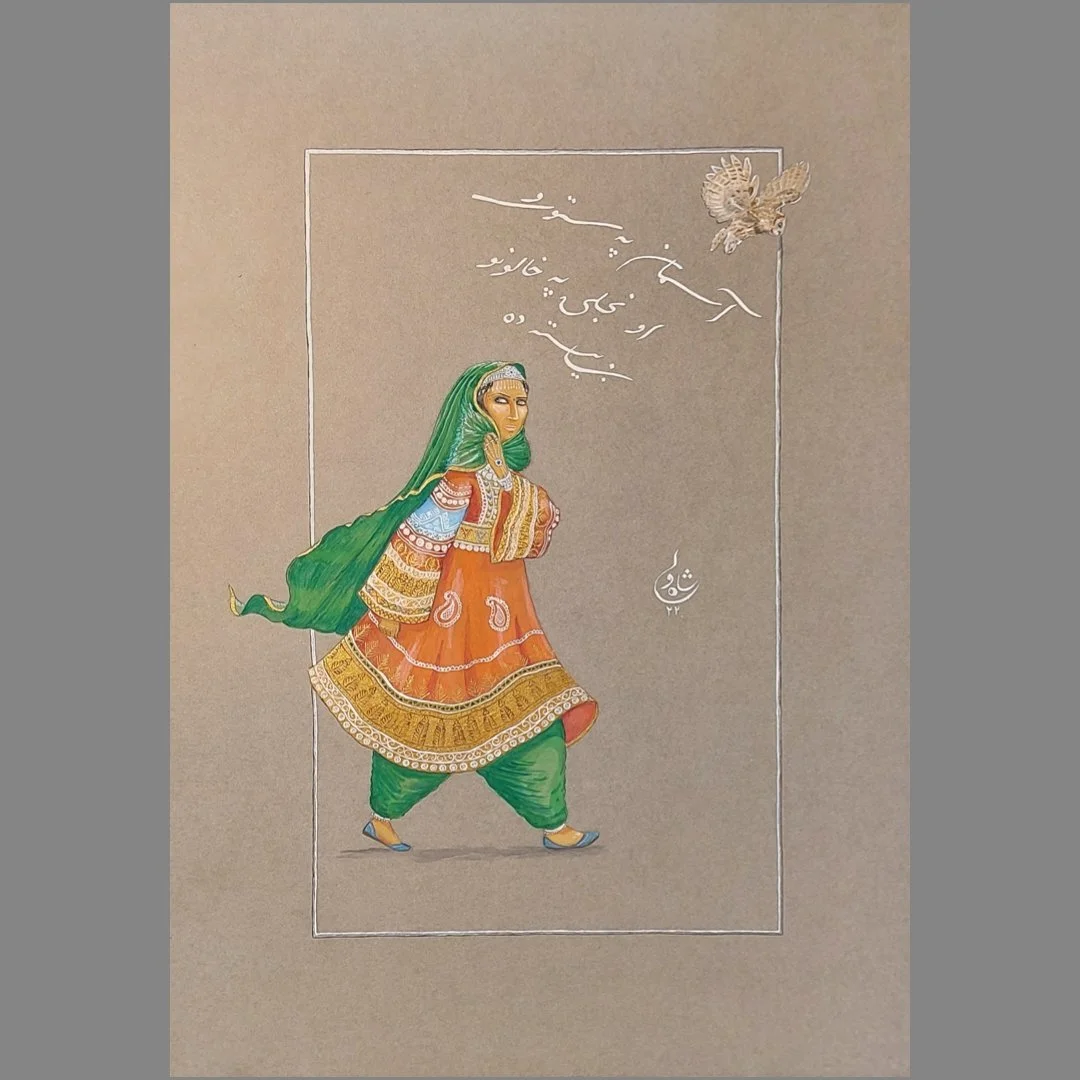
Gouache & acrylic on board
A4
This painting is inspired by the calligraphy of the Pashto couplet (known as "landay"):
Āsmān puh stōrō
Ao njelay puh khālōnō
Shāista da
Translation:
As the sky with stars,
So the girl is beautiful with tattoos.
A tawny owl flies away above the subject. In traditional Pashtun culture of Afghanistan and the Northwest Frontier, women are adorned with tribal facial tattoos - small dots - when they become teenagers. Whilst these tattoos partly serve as beauty spots, they also identify the woman's tribe - much as clan tartans do in Scottish highland culture. The dots on this woman's face (3 on the temple; 1 between the eyes; 1 on the chin) identify her as a member of the Hotak tribe - one of the most famous members of which was the Taliban's first leader, Mullah Muhammad Omar.
This style of dress is nowadays usually seen worn by the nomadic Pashtuns known collectively as “Kuchi”.
Paintings inspired by Indo-Persian miniatures and Burmo-Siamese temple art. Further examples can be found in the Gallery & Sales section of this website or by clicking Shop All.