Gouache and 24-carat gold leaf on board
Unframed dimensions: 15cm x 50cm
A miniature-style painting, depicting a Burmese forest monk (known by the Pali term "araññavāsī") meditating beneath a Bodhi tree - the tree under which The Buddha achieved Enlightenment, 2,500 years ago.
The details of this painting gradually reveal themselves, the longer one looks at it. The mountain-top stupas give way to a large fruit bat flying out of the Bodhi tree. Beneath, a screech owl has caught a rat - perpetuating the karmic cycle of death and rebirth known in Buddhism as "samsāra". A reticulated python descends the tree, possibly hunting the owlet nearby. Lower down, a green pit viper awaits its own prey.
Over the monk's shoulder, a King Cobra slithers into view, and from behind the tree a large tiger snarls. On the ground in front of the monk, a scorpion ventures out of the darkness towards the light of the candle.
In contrast to kāmavāsī monks, who spend their time in villages, towns and cities, providing spiritual and karmic services to the laity, araññavāsī spend their time in the jungle, focusing on meditative practice.
Araññavāsī (literally, The People of the Forest) aim entirely to leave the material world behind, meditating on nature and - by entering the jungles of Asia, which are filled with potentially dangerous animals - to contemplate and confront their fears, and the very meaning of fear itself.
All this, in their quest for Nirvana.
This painting includes the word "araññavasī" written in Burmese script (အရညဝါသီ) beneath the monk.
An eye-catching and delightfully detailed painting, which brings an element of contemplative calm to any setting.
Gouache and 24-carat gold leaf on board
Unframed dimensions: 15cm x 50cm
A miniature-style painting, depicting a Burmese forest monk (known by the Pali term "araññavāsī") meditating beneath a Bodhi tree - the tree under which The Buddha achieved Enlightenment, 2,500 years ago.
The details of this painting gradually reveal themselves, the longer one looks at it. The mountain-top stupas give way to a large fruit bat flying out of the Bodhi tree. Beneath, a screech owl has caught a rat - perpetuating the karmic cycle of death and rebirth known in Buddhism as "samsāra". A reticulated python descends the tree, possibly hunting the owlet nearby. Lower down, a green pit viper awaits its own prey.
Over the monk's shoulder, a King Cobra slithers into view, and from behind the tree a large tiger snarls. On the ground in front of the monk, a scorpion ventures out of the darkness towards the light of the candle.
In contrast to kāmavāsī monks, who spend their time in villages, towns and cities, providing spiritual and karmic services to the laity, araññavāsī spend their time in the jungle, focusing on meditative practice.
Araññavāsī (literally, The People of the Forest) aim entirely to leave the material world behind, meditating on nature and - by entering the jungles of Asia, which are filled with potentially dangerous animals - to contemplate and confront their fears, and the very meaning of fear itself.
All this, in their quest for Nirvana.
This painting includes the word "araññavasī" written in Burmese script (အရညဝါသီ) beneath the monk.
An eye-catching and delightfully detailed painting, which brings an element of contemplative calm to any setting.

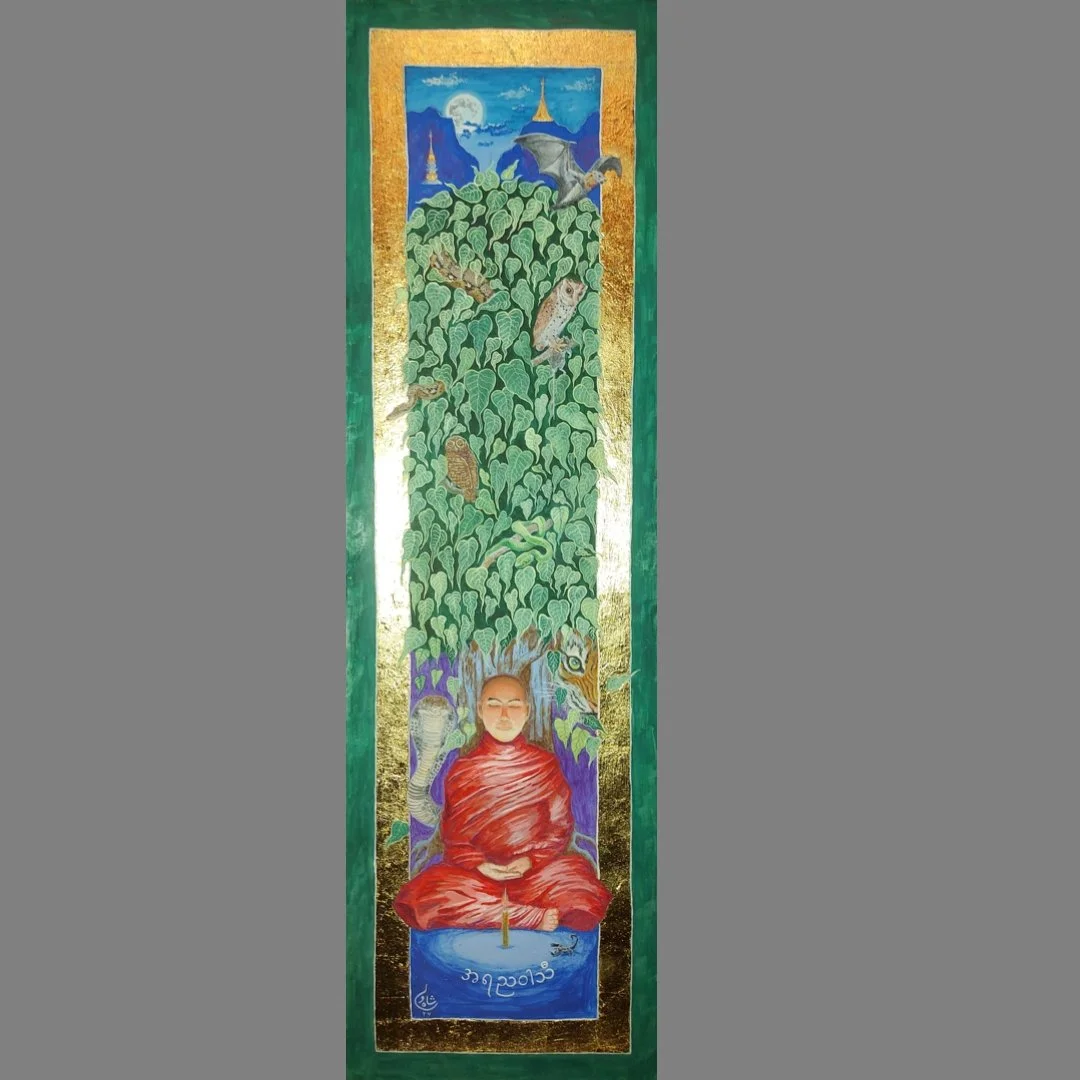 Image 1 of 11
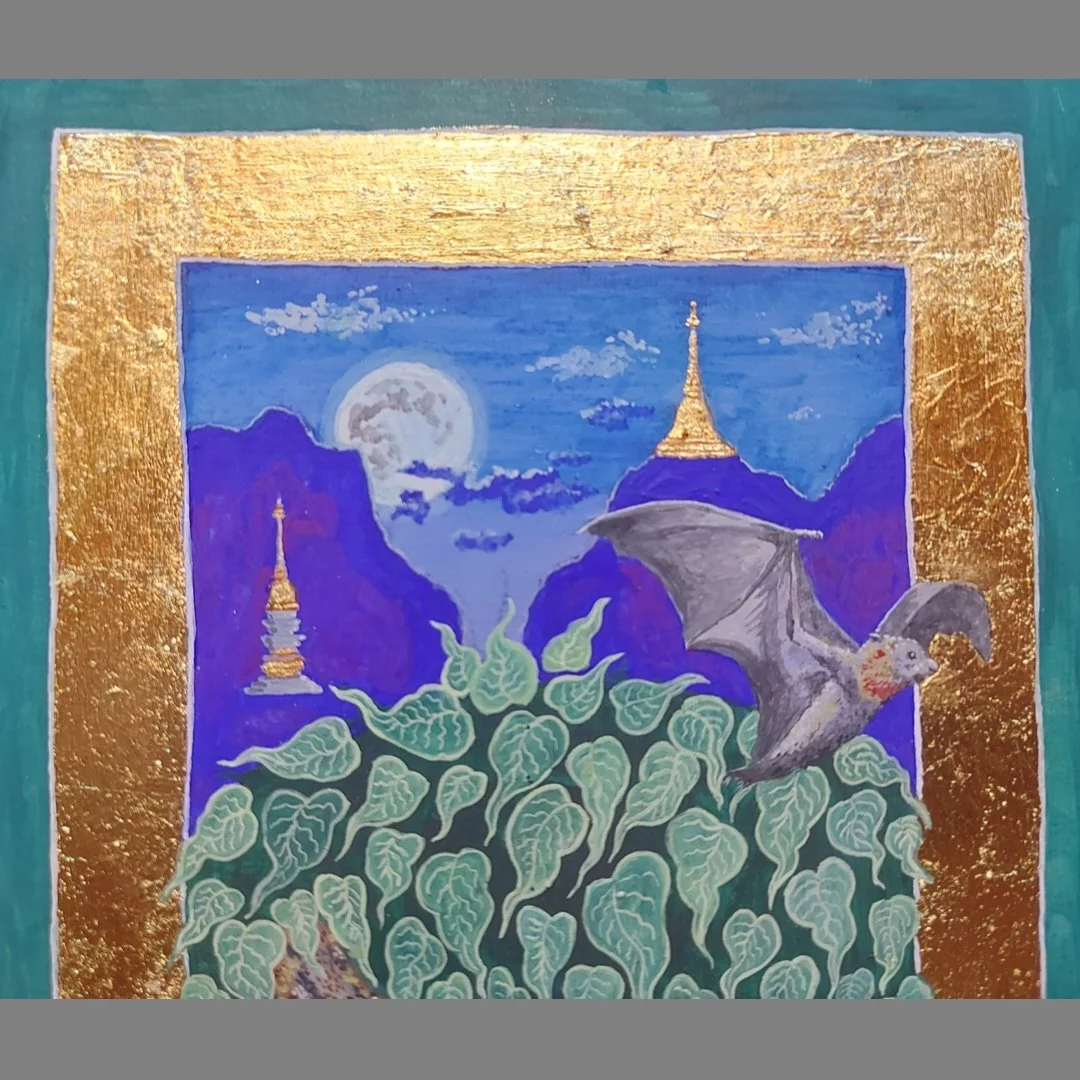 Image 2 of 11
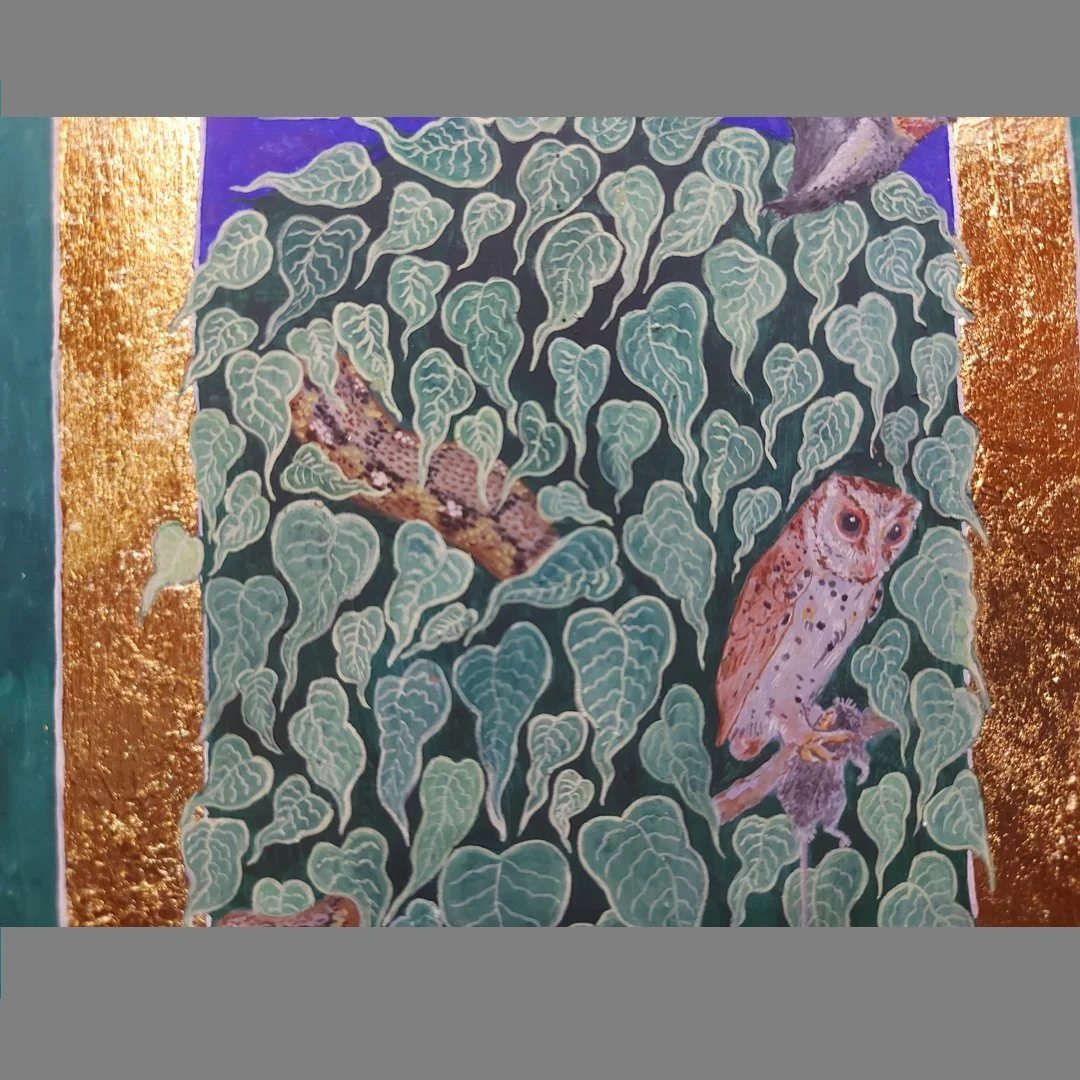 Image 3 of 11
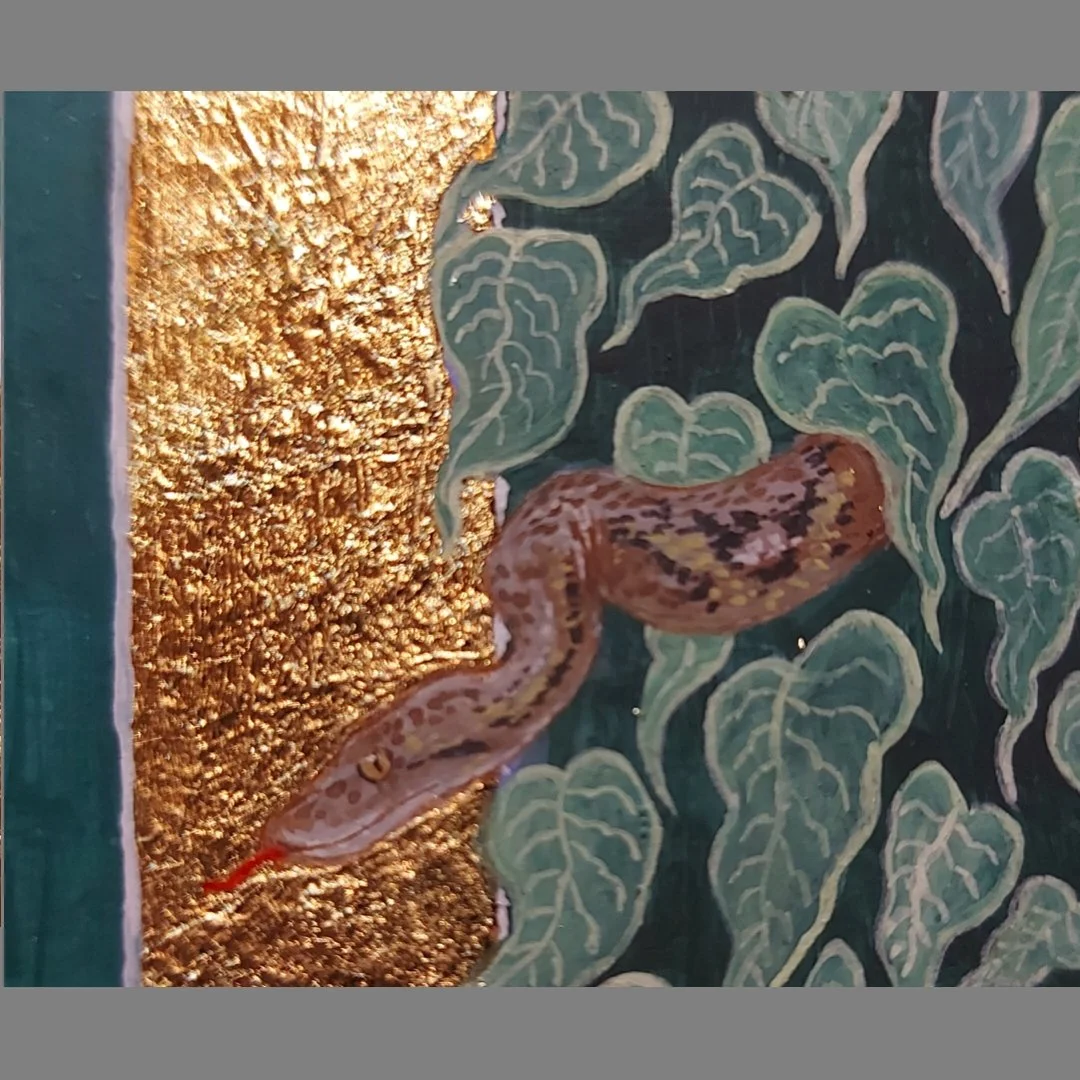 Image 4 of 11
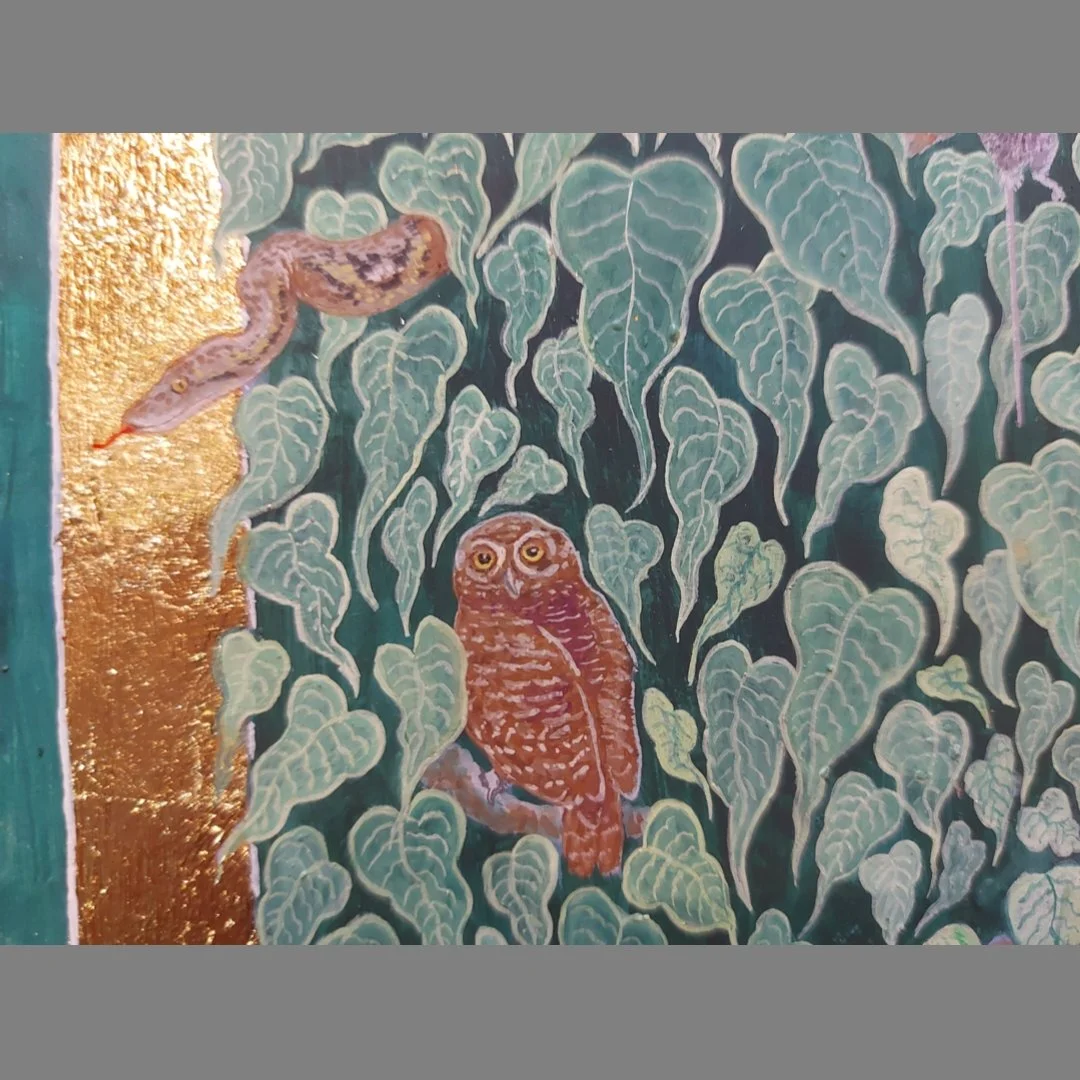 Image 5 of 11
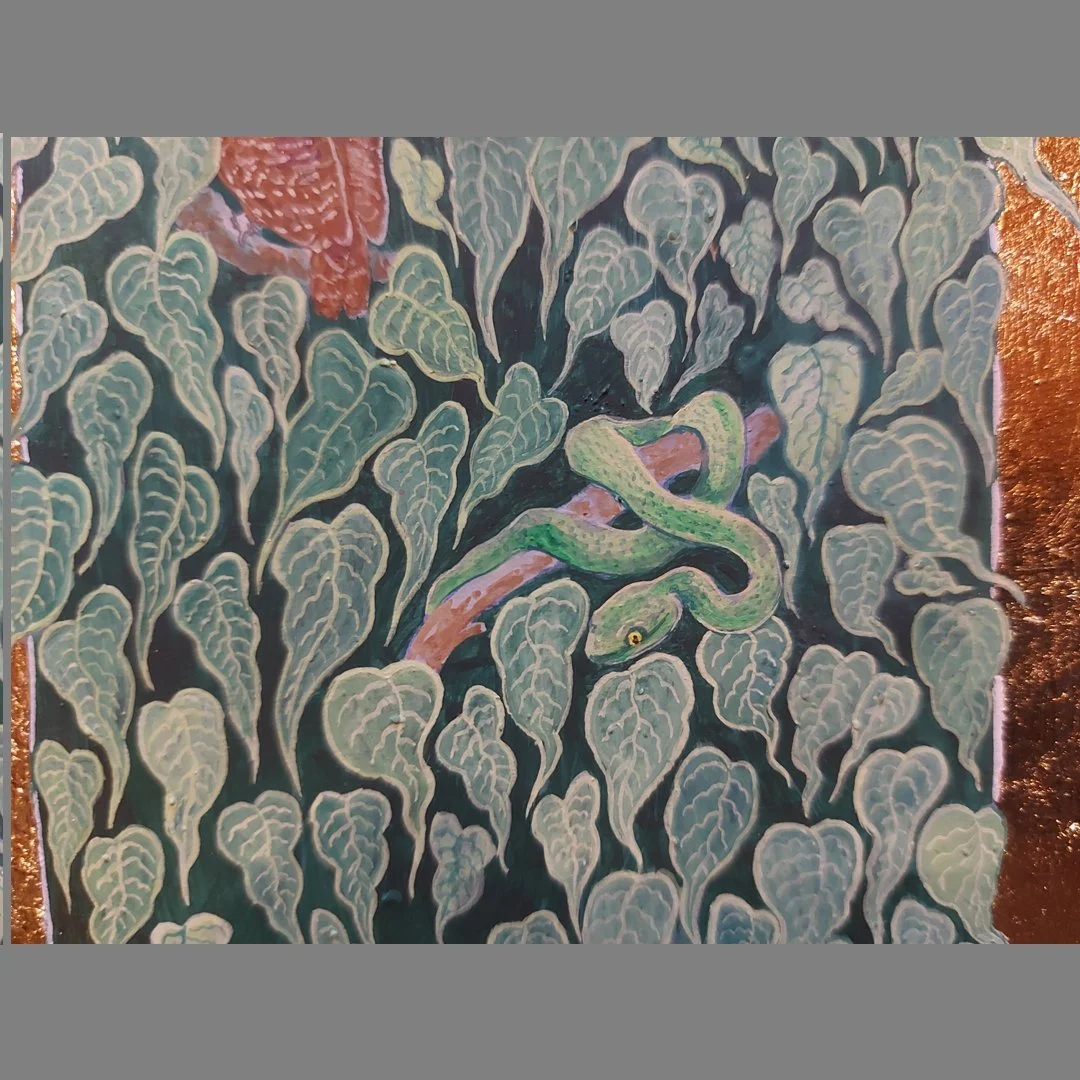 Image 6 of 11
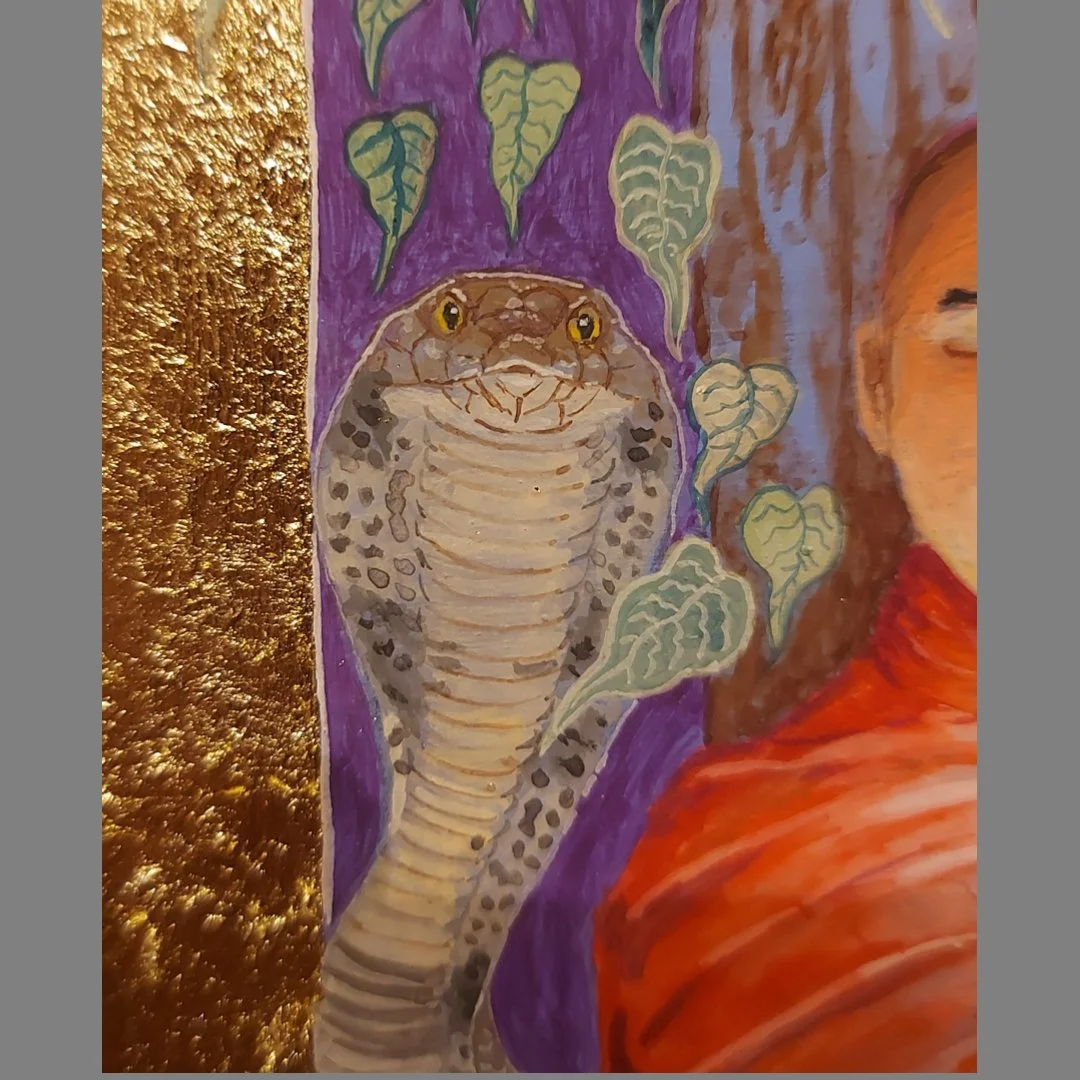 Image 7 of 11
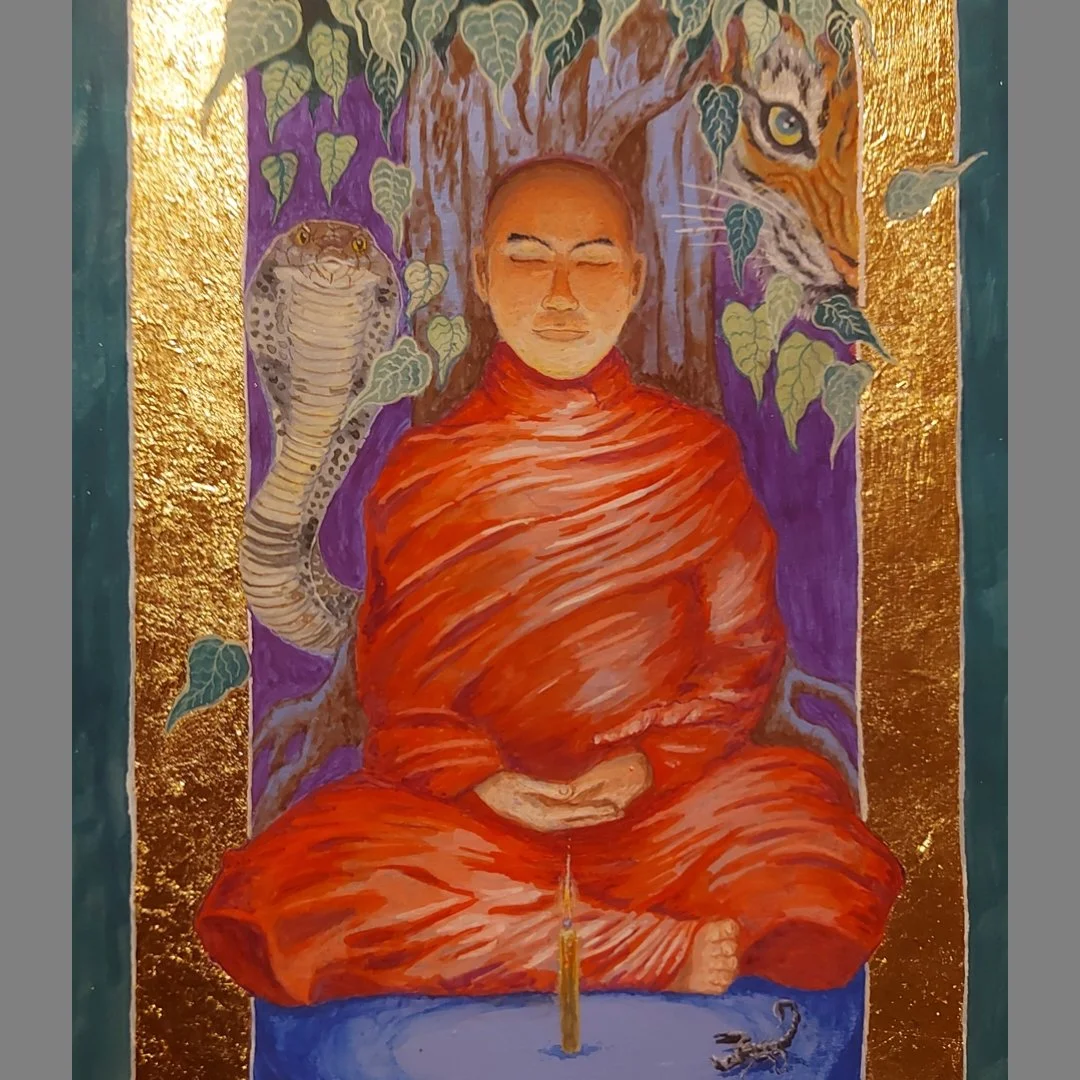 Image 8 of 11
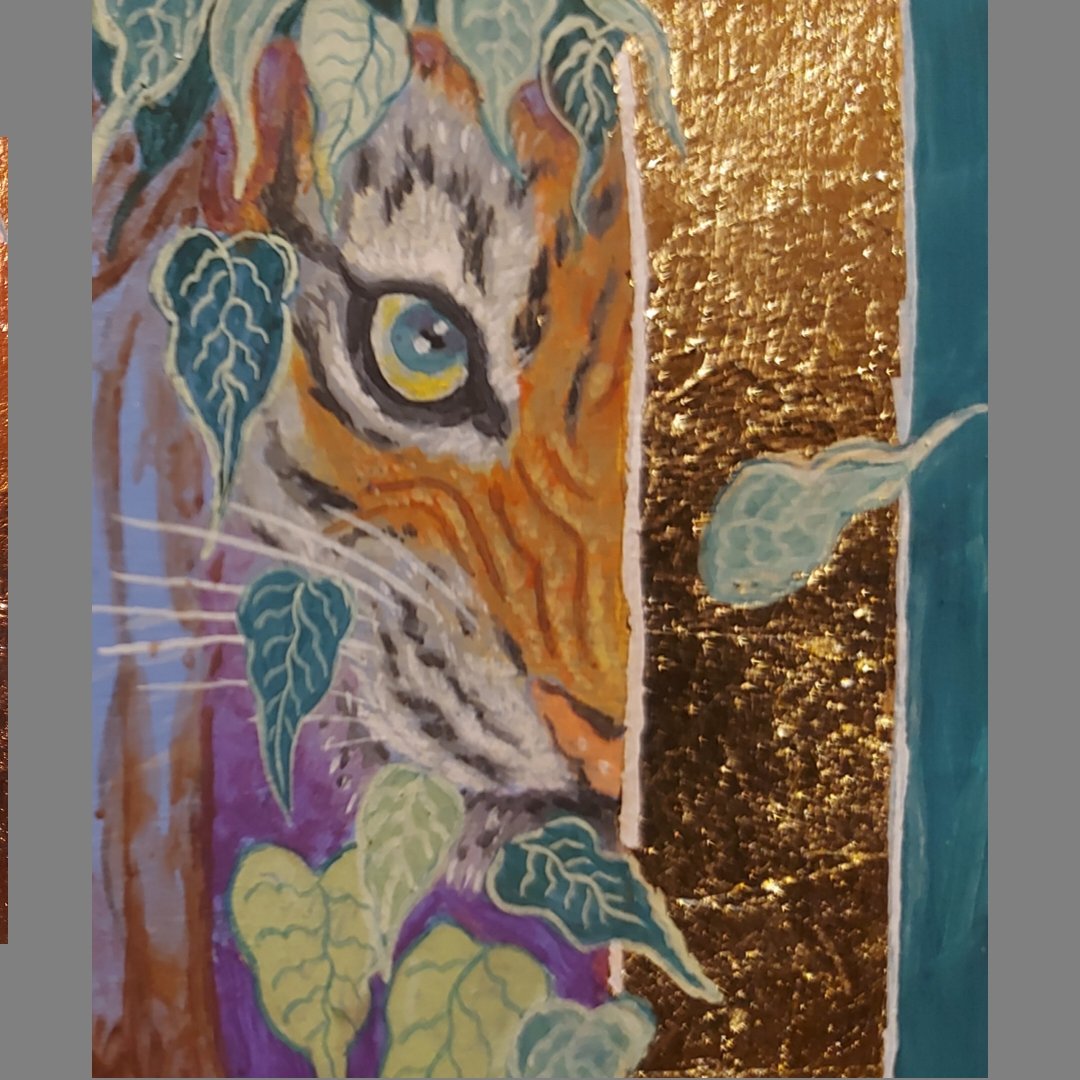 Image 9 of 11
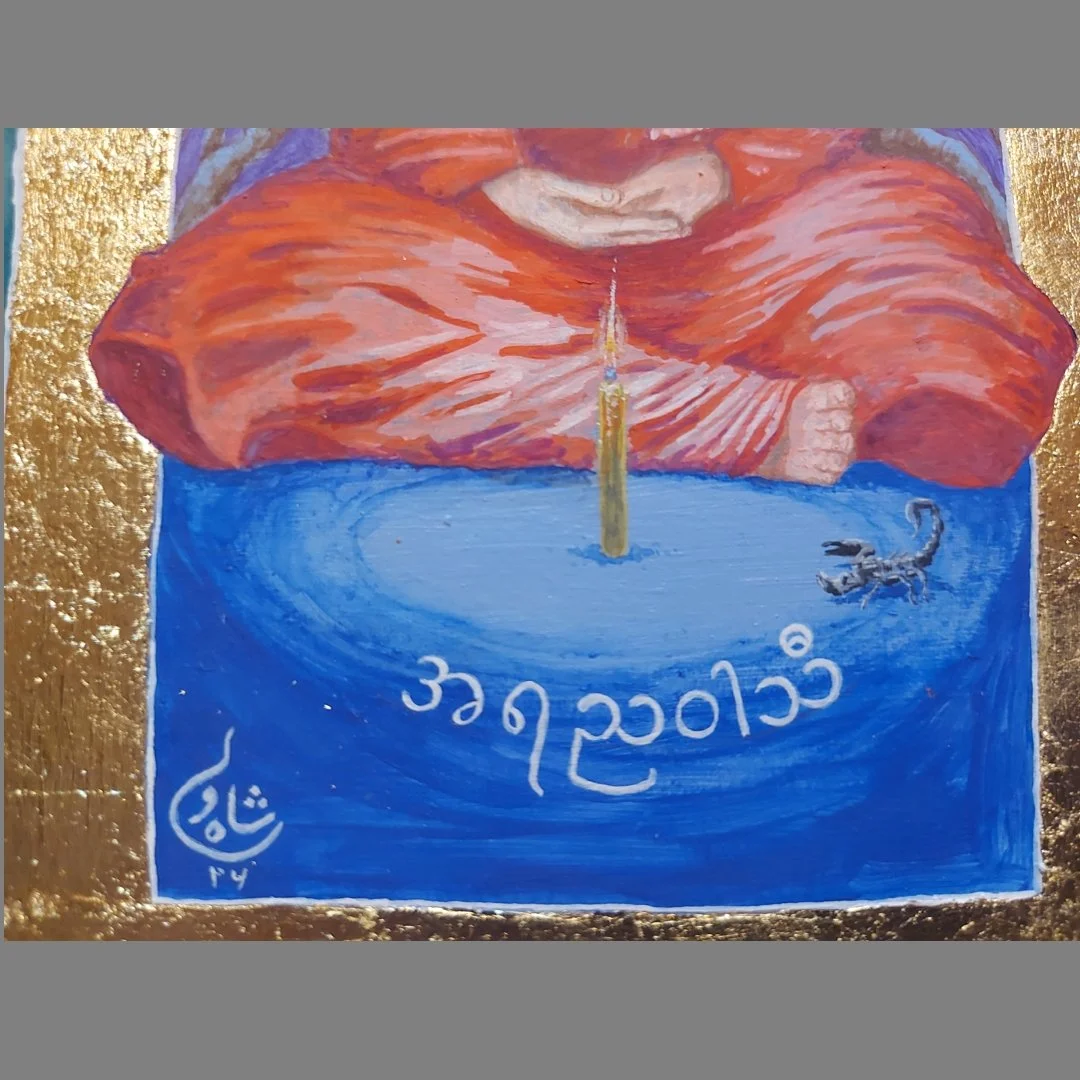 Image 10 of 11
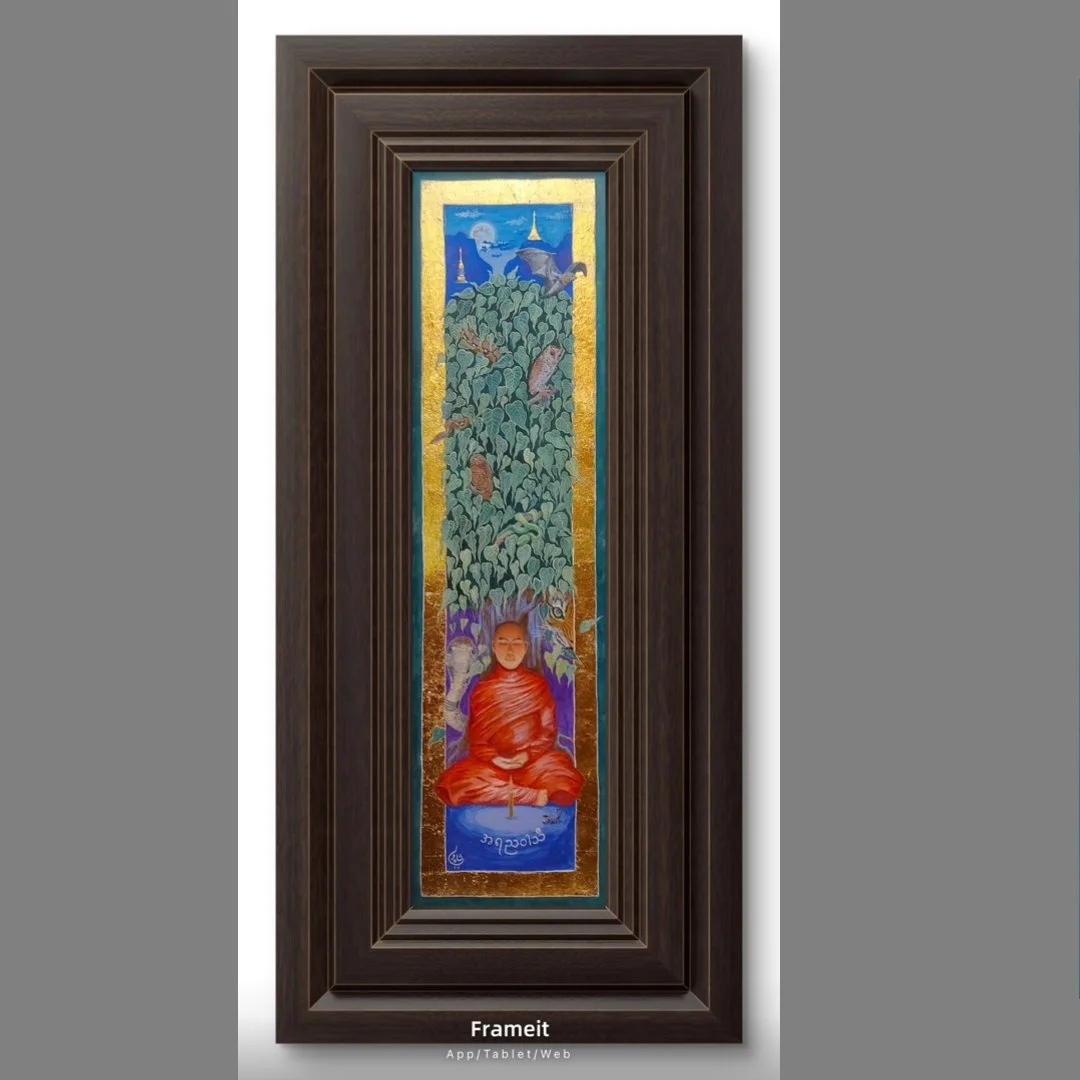 Image 11 of 11