Gouache & 24k gold leaf on mount board.
Each painting measures 15cm x 10cm.
Frame dimensions: 24cm x 50cm
£465 (framed, and including p&p from Thailand)
How can these 4 paintings assist meditation? It is said that The Buddha spent an incarnation as a tiger. This polyptych therefore uses a tiger to illustrate 4 Buddhist concepts:
1. Dhamma: in Buddhism, the lotus represents Buddha Dhamma - the Buddha's teachings. Just as the lotus flower rises out of - and above - the swamp, so Dhamma rises out of and above Samsāra - the cycle of rebirth, to which all sentient beings are subject. In this painting, the tiger swims through Samsāra - as do we all. The Dhamma is the only way to break that cycle through attaining Nirvana.
2. Samādhi: Meditation, or Samādhi, is core to Buddhist practice. Through restraining and focusing the mind, Enlightenment may finally be reached. In Buddhism, the tiger often symbolises the wild, untamed human mind - and the strength and power required to restrain it. In this painting, the tiger rests beneath a Frangipani - known in Thai by the Sanskrit name "Līlāvati", meaning "playful girl". The tiger's mind is still, evoking the Buddha's victory, through meditation, over Māra - even when Māra deployed his daughters to distract the Buddha.
3. Cētana: Intention, or Cētana, is the root of Kamma/Karma, meaning "action". Our intention is central to our Karma. In this painting, the tiger awakens at sunset to contemplate its next move. Its own Karma hinges on its intention. Bamboo also connotes sanctuary in Buddhism, reflecting the “three refuges” of The Buddha, Dhamma and Sangha.
4. Kamma: or Karma, means "action", but is often understood to be the fruit or result of an action. The tiger is governed by instinct, and so an incarnation as a tiger necessarily involves killing. This incarnation will inevitably, therefore, incur negative kamma - albeit mitigated by instinct, nature and the necessity for survival.
Inspired by Indo-Persian miniatures and Burmo-Siamese temple art, this painting functions as more than just artwork, and as an aid for meditation on these core Buddhist concepts.
Gouache & 24k gold leaf on mount board.
Each painting measures 15cm x 10cm.
Frame dimensions: 24cm x 50cm
£465 (framed, and including p&p from Thailand)
How can these 4 paintings assist meditation? It is said that The Buddha spent an incarnation as a tiger. This polyptych therefore uses a tiger to illustrate 4 Buddhist concepts:
1. Dhamma: in Buddhism, the lotus represents Buddha Dhamma - the Buddha's teachings. Just as the lotus flower rises out of - and above - the swamp, so Dhamma rises out of and above Samsāra - the cycle of rebirth, to which all sentient beings are subject. In this painting, the tiger swims through Samsāra - as do we all. The Dhamma is the only way to break that cycle through attaining Nirvana.
2. Samādhi: Meditation, or Samādhi, is core to Buddhist practice. Through restraining and focusing the mind, Enlightenment may finally be reached. In Buddhism, the tiger often symbolises the wild, untamed human mind - and the strength and power required to restrain it. In this painting, the tiger rests beneath a Frangipani - known in Thai by the Sanskrit name "Līlāvati", meaning "playful girl". The tiger's mind is still, evoking the Buddha's victory, through meditation, over Māra - even when Māra deployed his daughters to distract the Buddha.
3. Cētana: Intention, or Cētana, is the root of Kamma/Karma, meaning "action". Our intention is central to our Karma. In this painting, the tiger awakens at sunset to contemplate its next move. Its own Karma hinges on its intention. Bamboo also connotes sanctuary in Buddhism, reflecting the “three refuges” of The Buddha, Dhamma and Sangha.
4. Kamma: or Karma, means "action", but is often understood to be the fruit or result of an action. The tiger is governed by instinct, and so an incarnation as a tiger necessarily involves killing. This incarnation will inevitably, therefore, incur negative kamma - albeit mitigated by instinct, nature and the necessity for survival.
Inspired by Indo-Persian miniatures and Burmo-Siamese temple art, this painting functions as more than just artwork, and as an aid for meditation on these core Buddhist concepts.

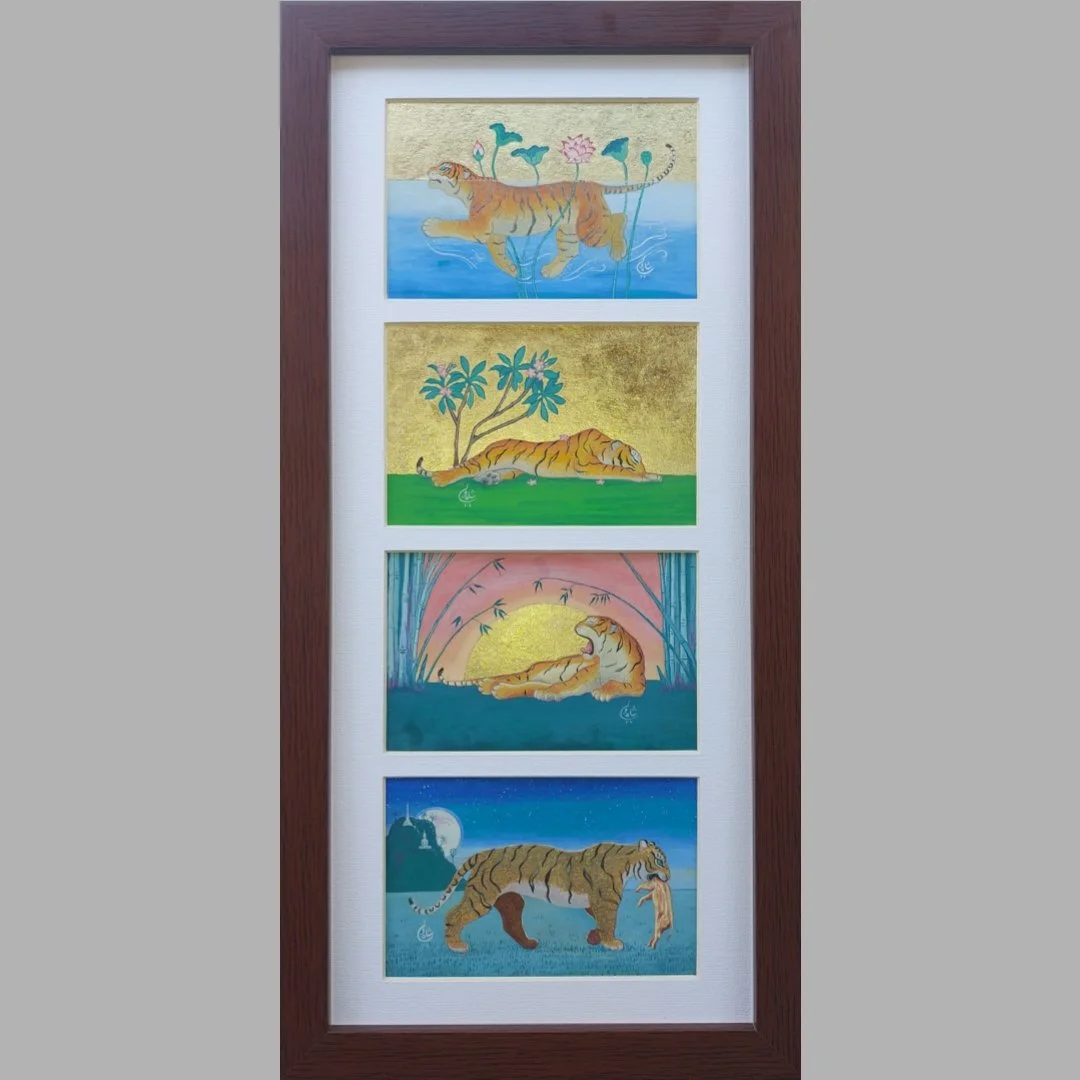 Image 1 of 9
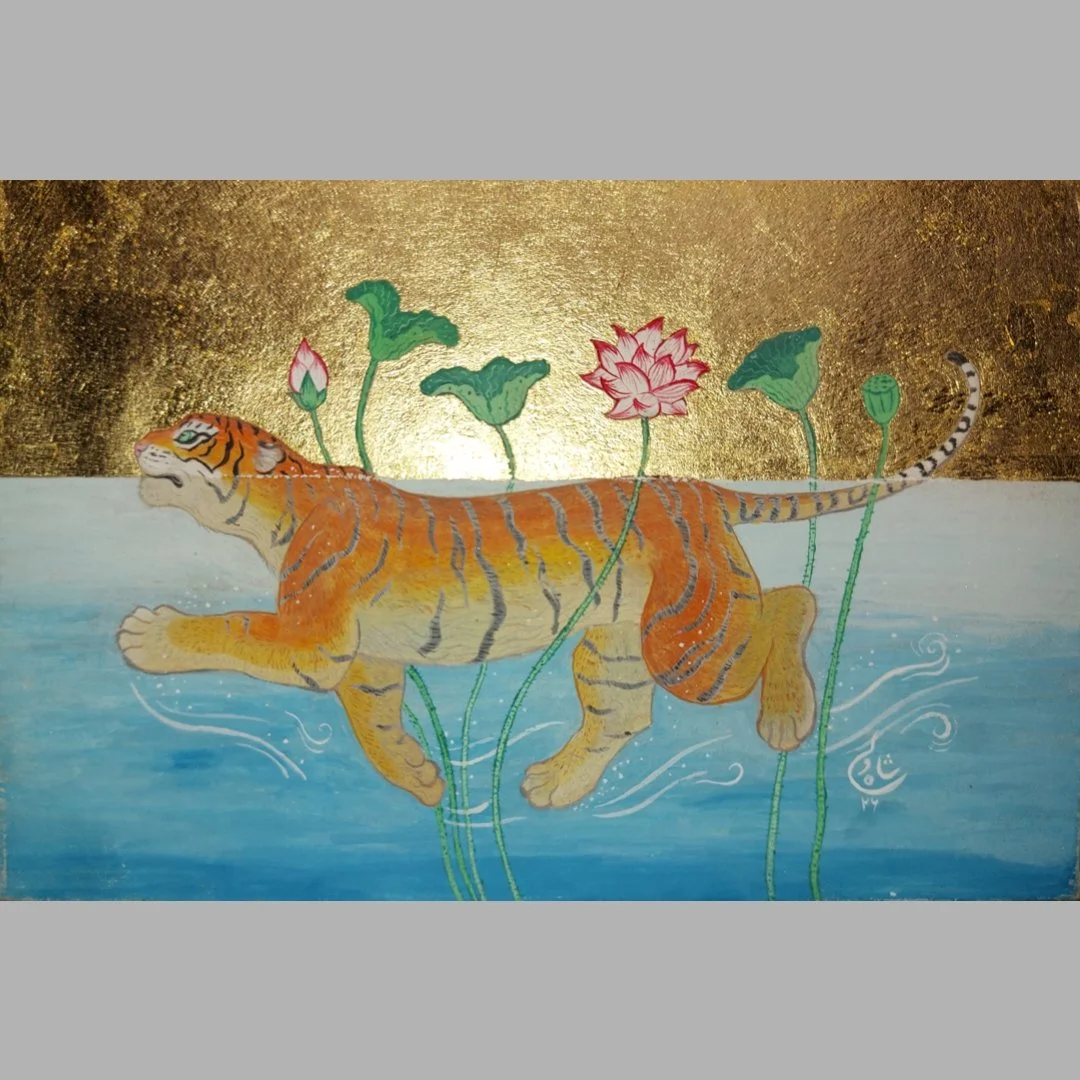 Image 2 of 9
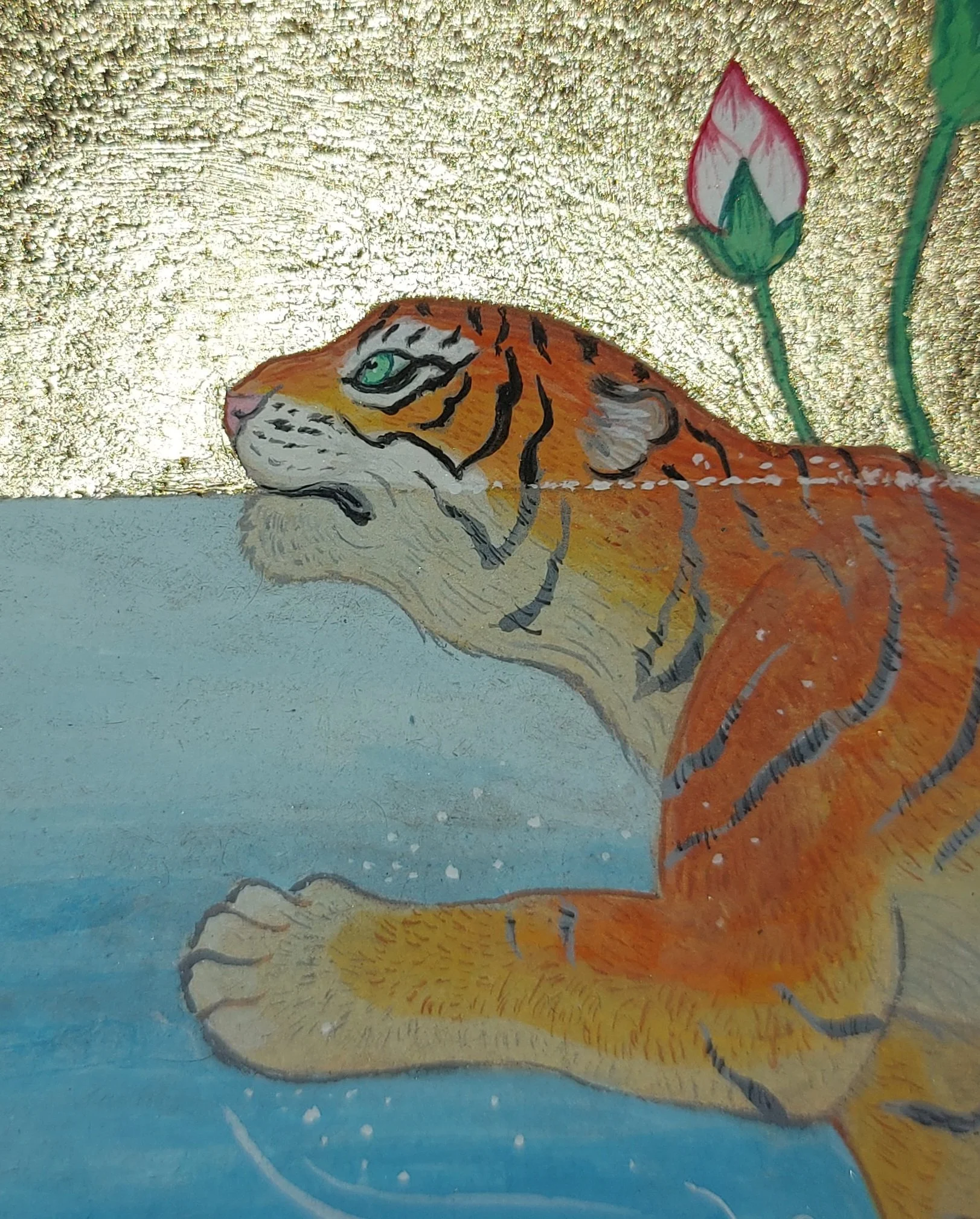 Image 3 of 9
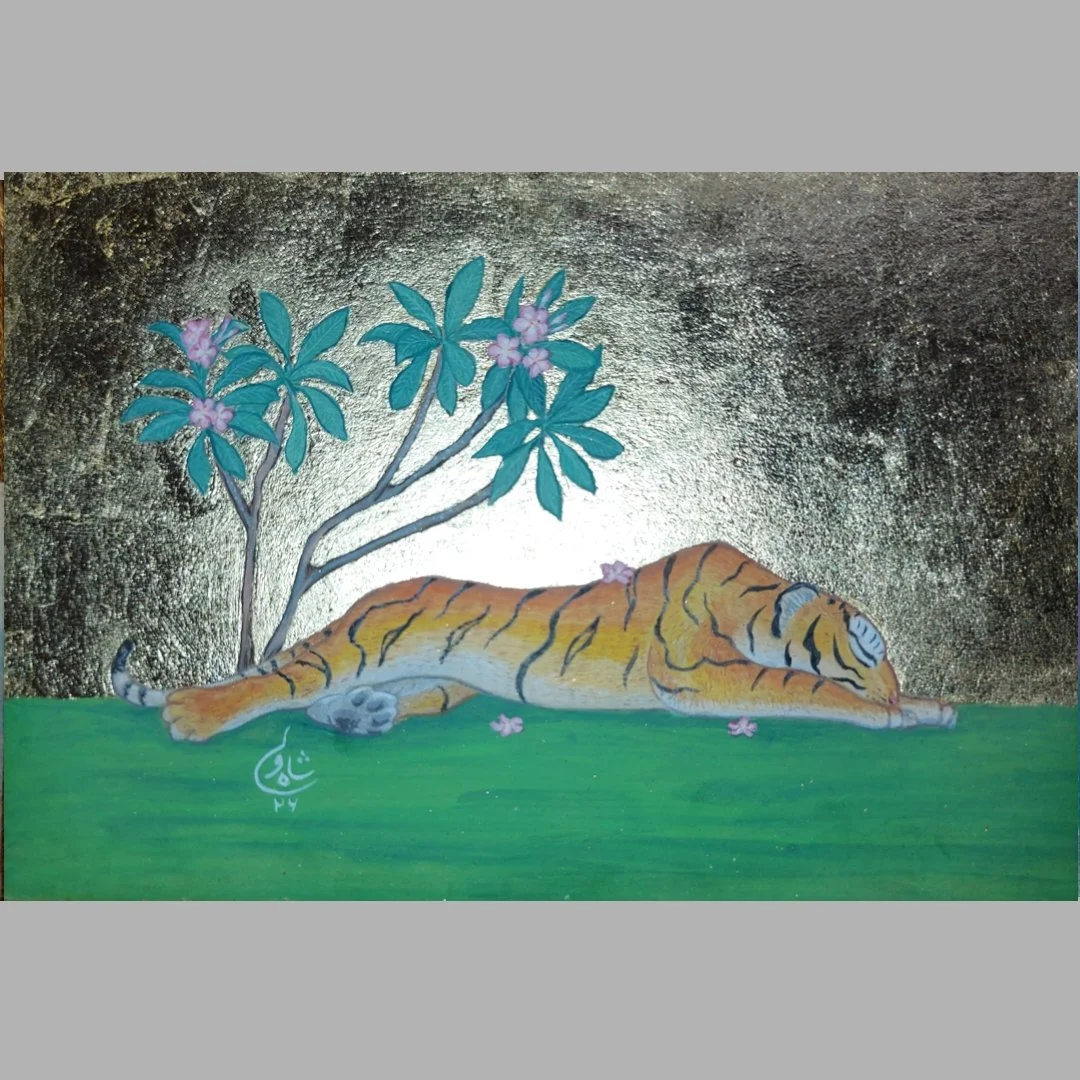 Image 4 of 9
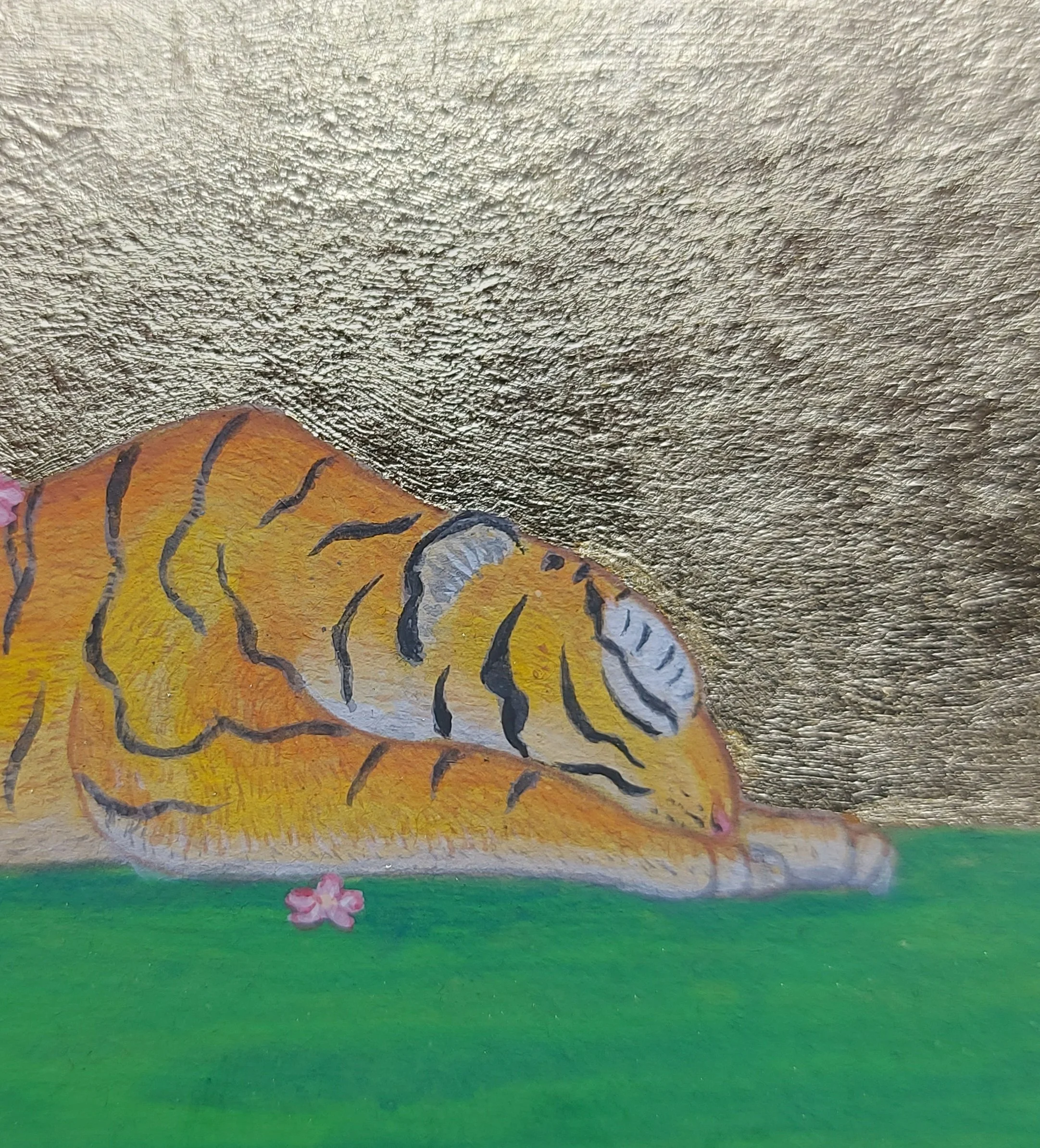 Image 5 of 9
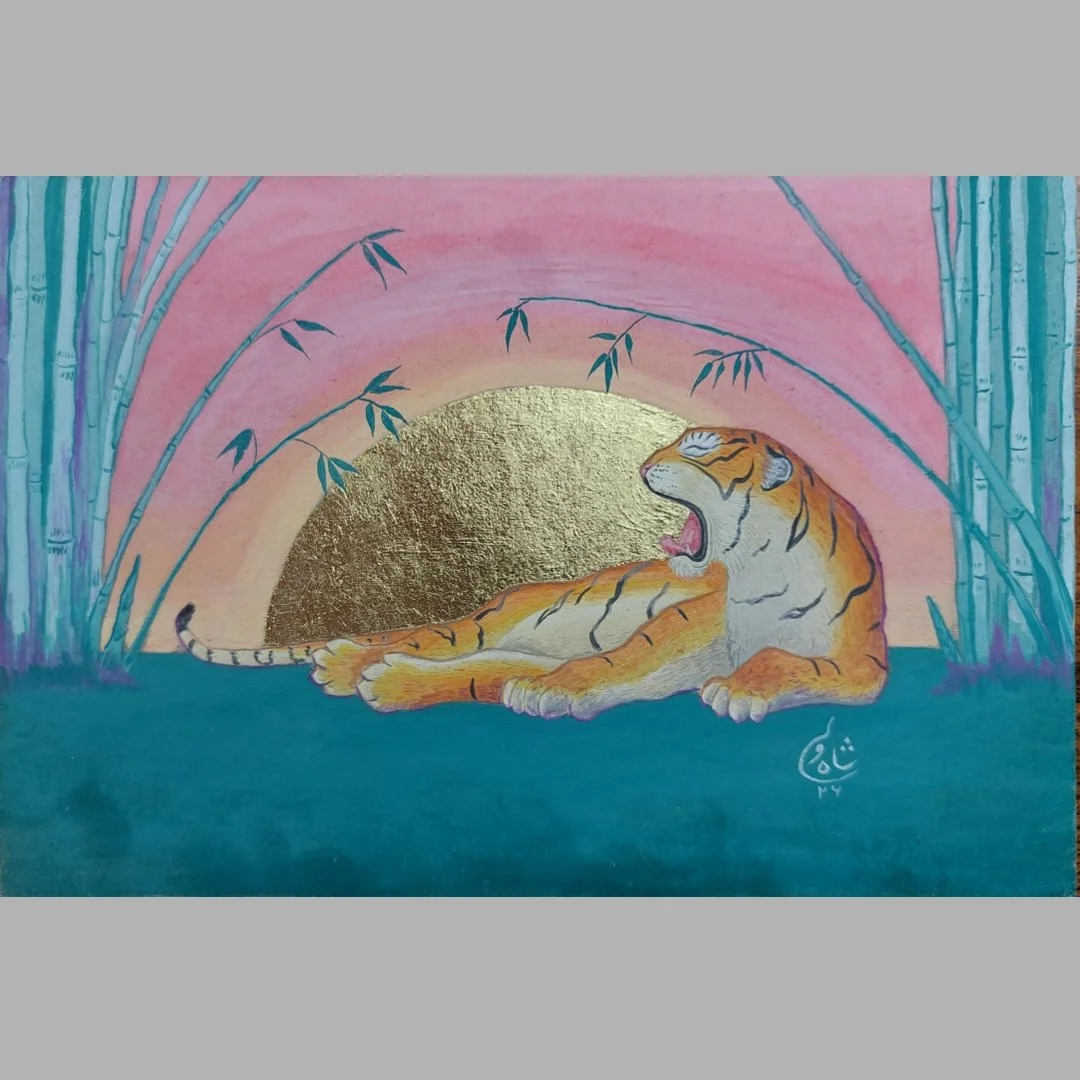 Image 6 of 9
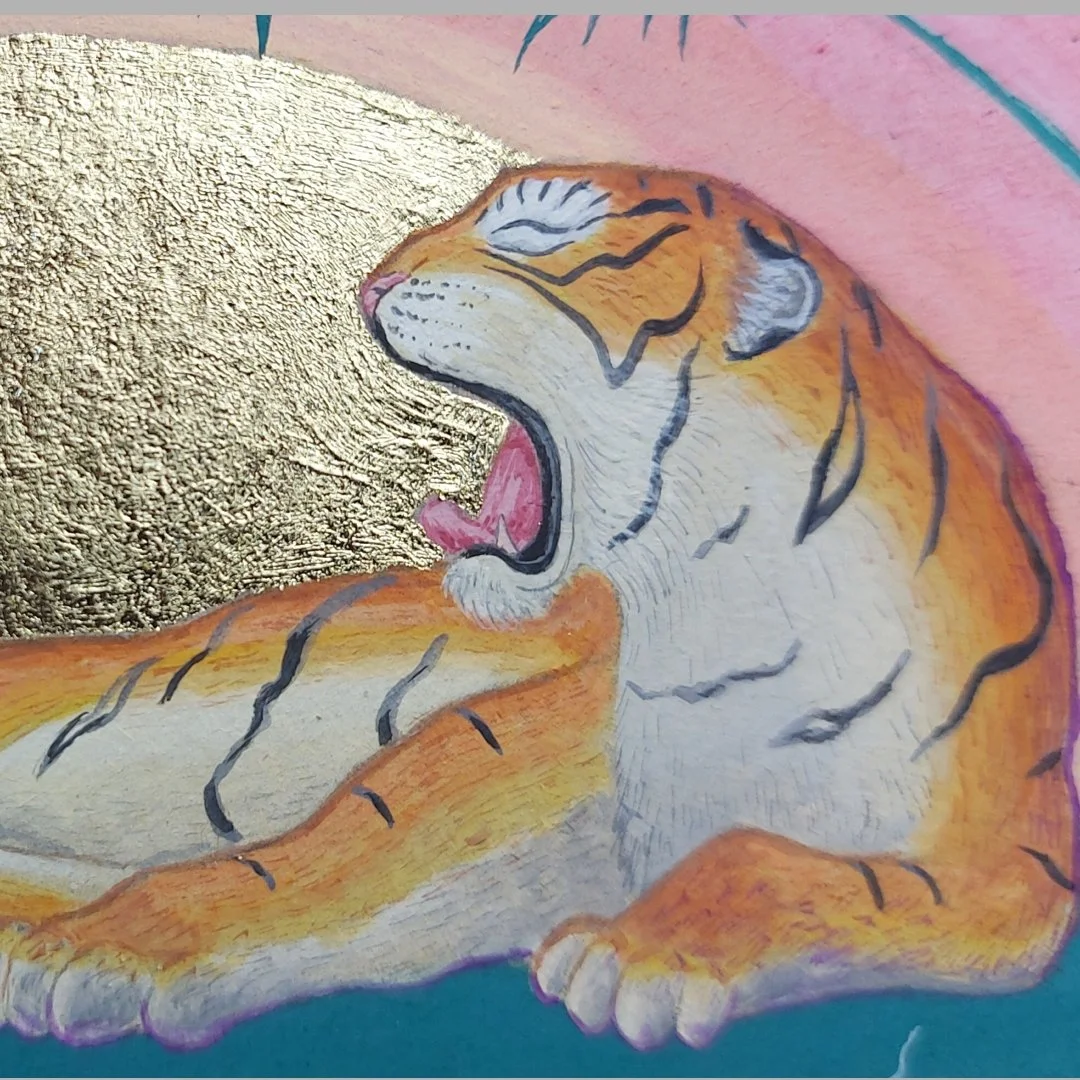 Image 7 of 9
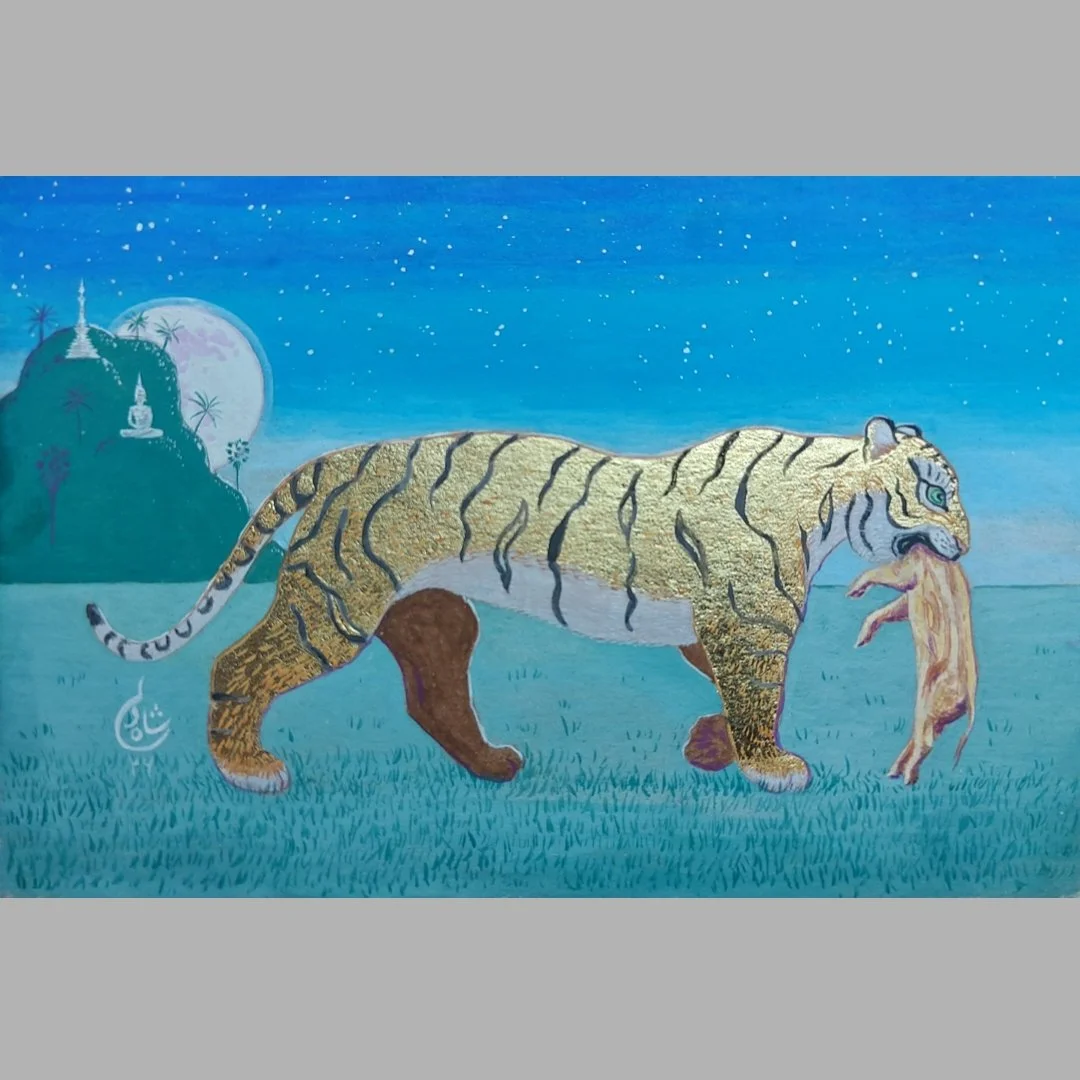 Image 8 of 9
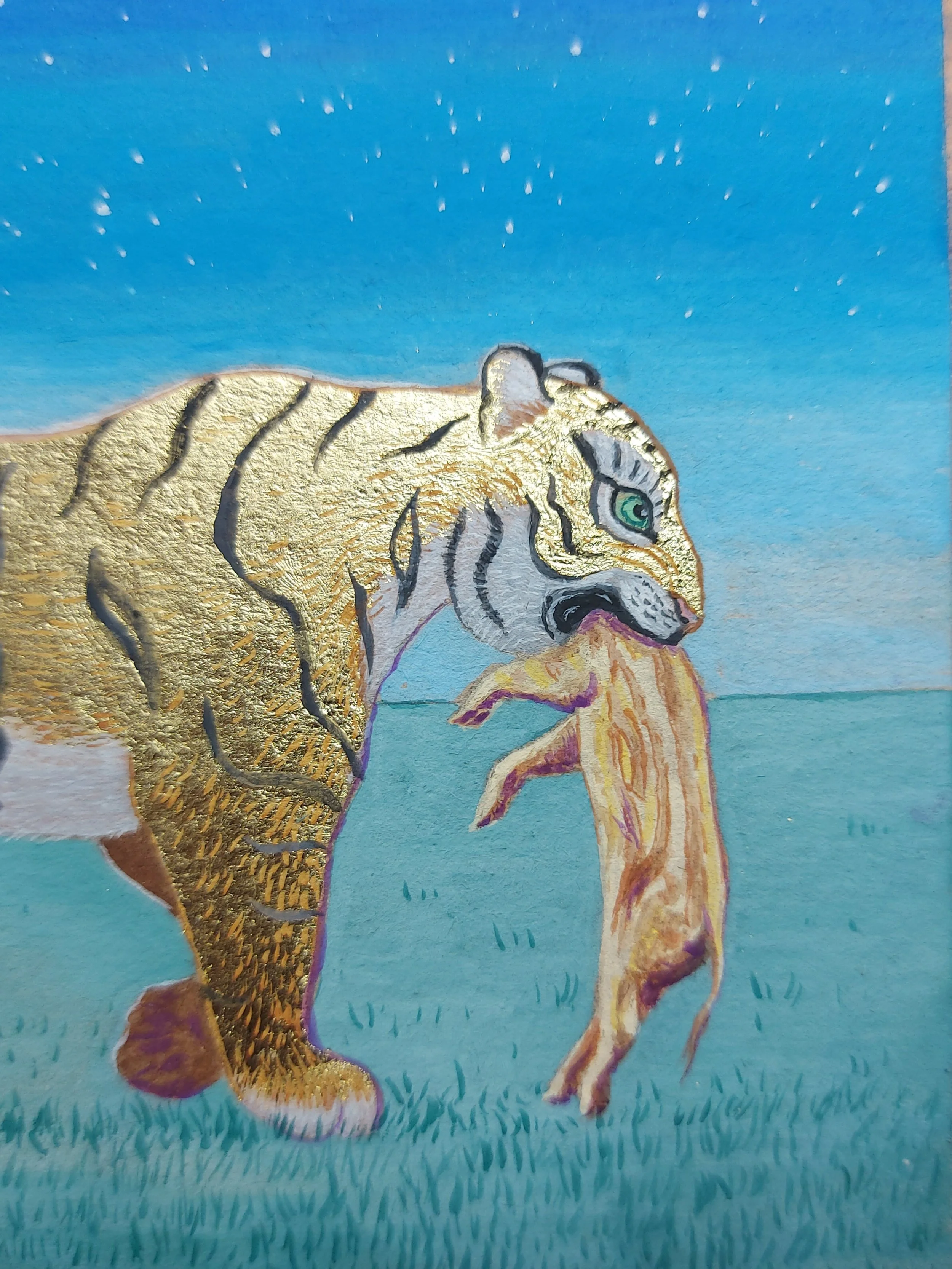 Image 9 of 9