Gouache & acrylic on board
A4
This painting is inspired by the calligraphy of the Pashto couplet (known as "landay"):
Āsmān puh stōrō
Ao njelay puh khālōnō
Shāista da
Translation:
As the sky with stars,
So the girl is beautiful with tattoos.
A tawny owl flies away above the subject. In traditional Pashtun culture of Afghanistan and the Northwest Frontier, women are adorned with tribal facial tattoos - small dots - when they become teenagers. Whilst these tattoos partly serve as beauty spots, they also identify the woman's tribe - much as clan tartans do in Scottish highland culture. The dots on this woman's face (3 on the temple; 1 between the eyes; 1 on the chin) identify her as a member of the Hotak tribe - one of the most famous members of which was the Taliban's first leader, Mullah Muhammad Omar.
This style of dress is nowadays usually seen worn by the nomadic Pashtuns known collectively as “Kuchi”.
Gouache & acrylic on board
A4
This painting is inspired by the calligraphy of the Pashto couplet (known as "landay"):
Āsmān puh stōrō
Ao njelay puh khālōnō
Shāista da
Translation:
As the sky with stars,
So the girl is beautiful with tattoos.
A tawny owl flies away above the subject. In traditional Pashtun culture of Afghanistan and the Northwest Frontier, women are adorned with tribal facial tattoos - small dots - when they become teenagers. Whilst these tattoos partly serve as beauty spots, they also identify the woman's tribe - much as clan tartans do in Scottish highland culture. The dots on this woman's face (3 on the temple; 1 between the eyes; 1 on the chin) identify her as a member of the Hotak tribe - one of the most famous members of which was the Taliban's first leader, Mullah Muhammad Omar.
This style of dress is nowadays usually seen worn by the nomadic Pashtuns known collectively as “Kuchi”.

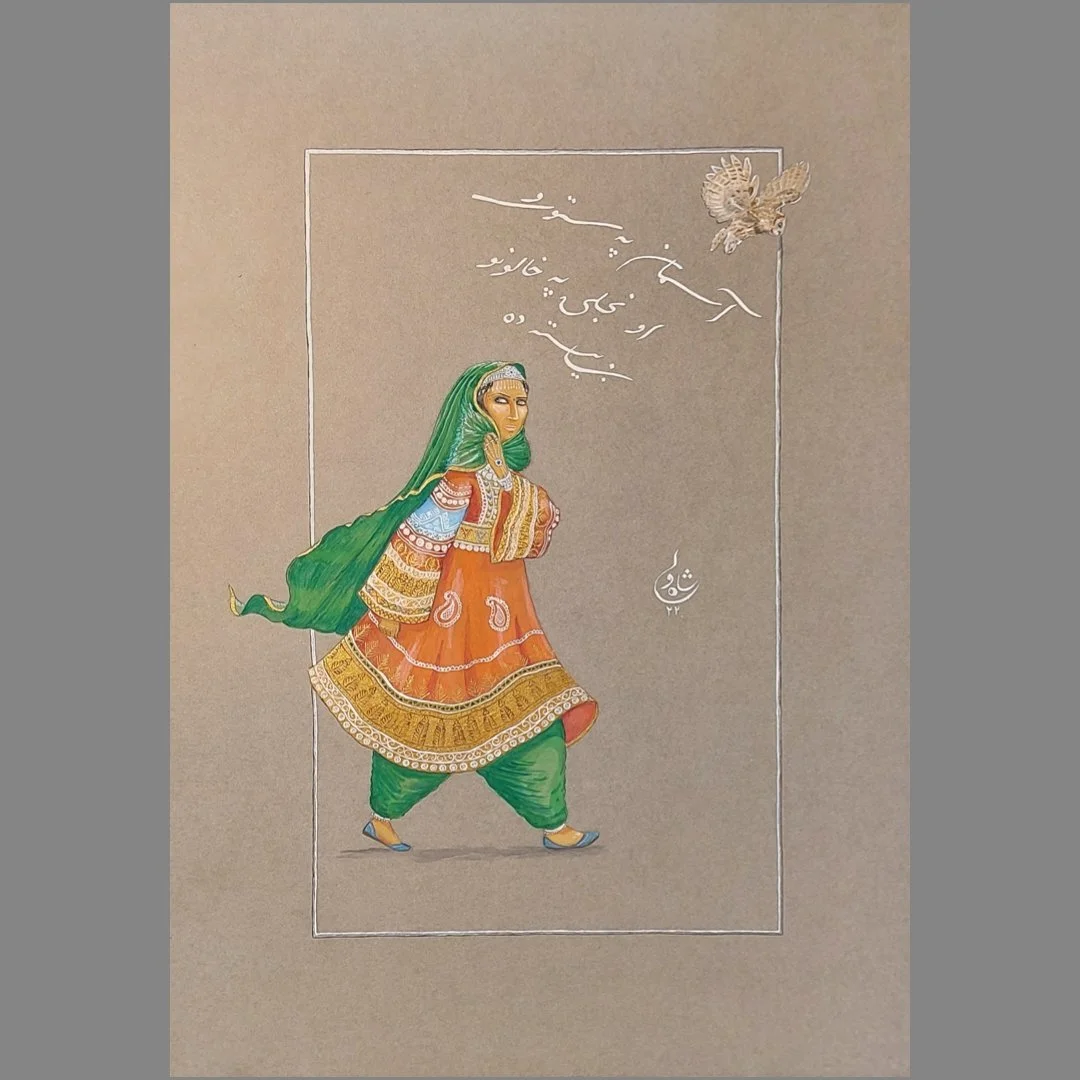 Image 1 of 6
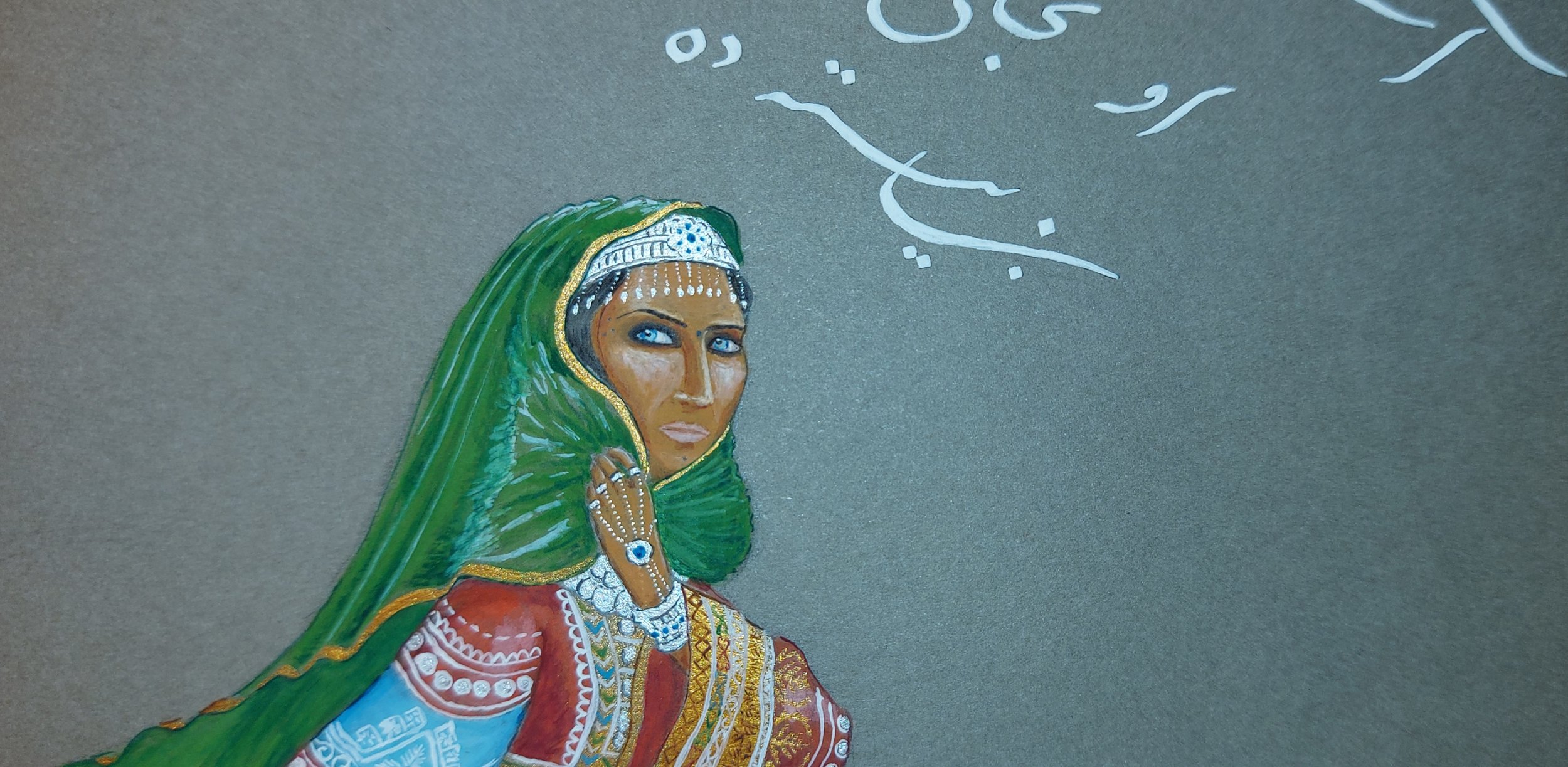 Image 2 of 6
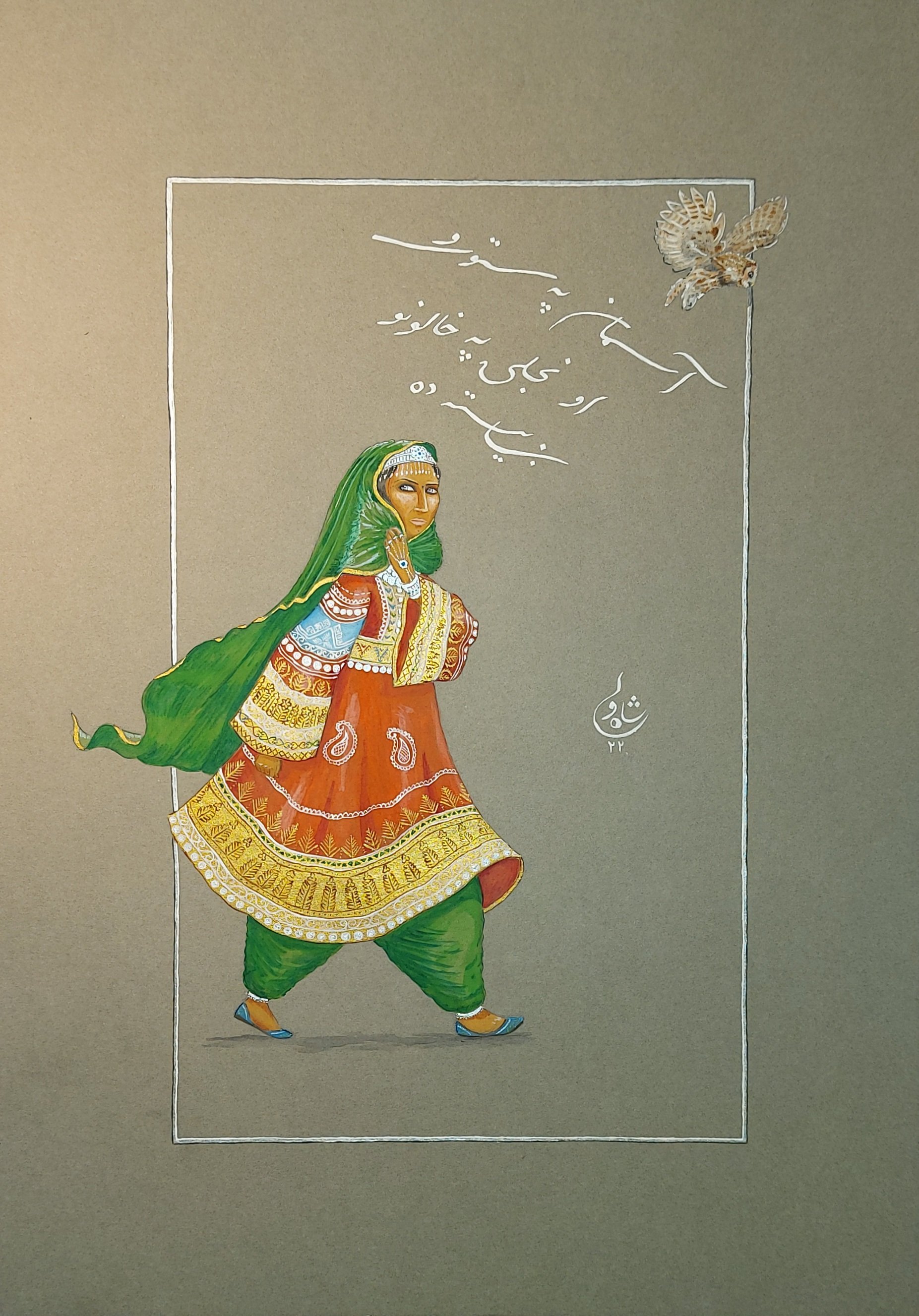 Image 3 of 6
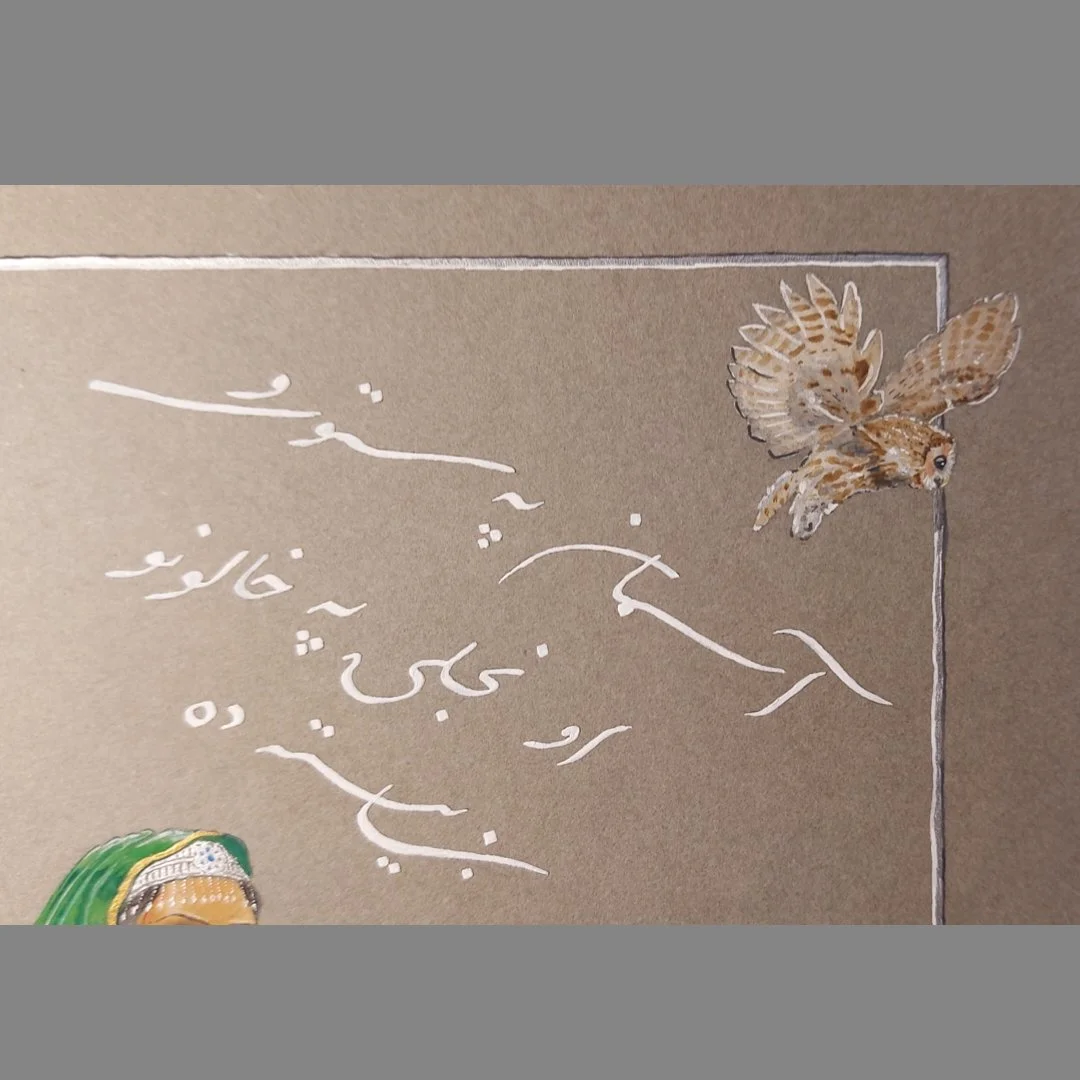 Image 4 of 6
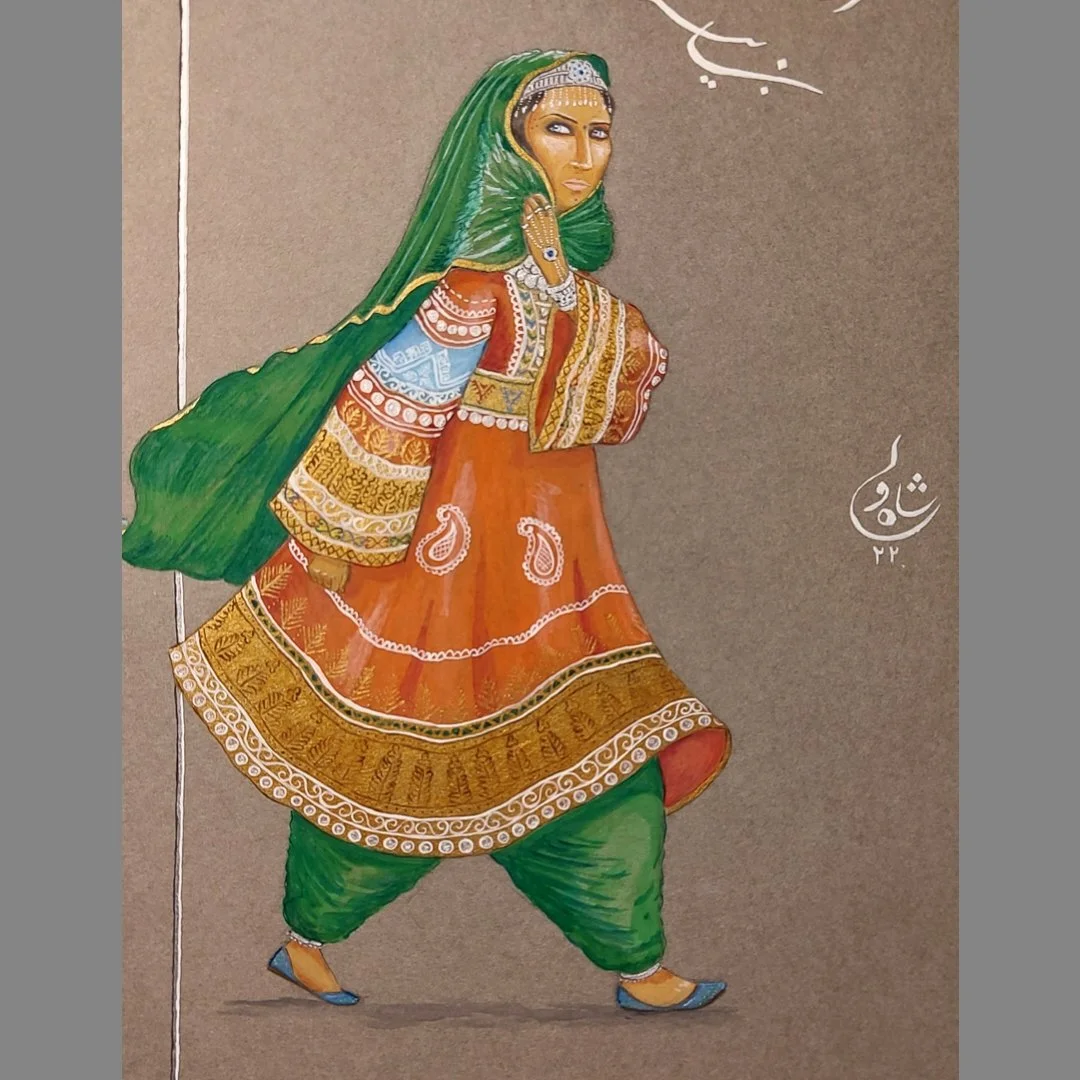 Image 5 of 6
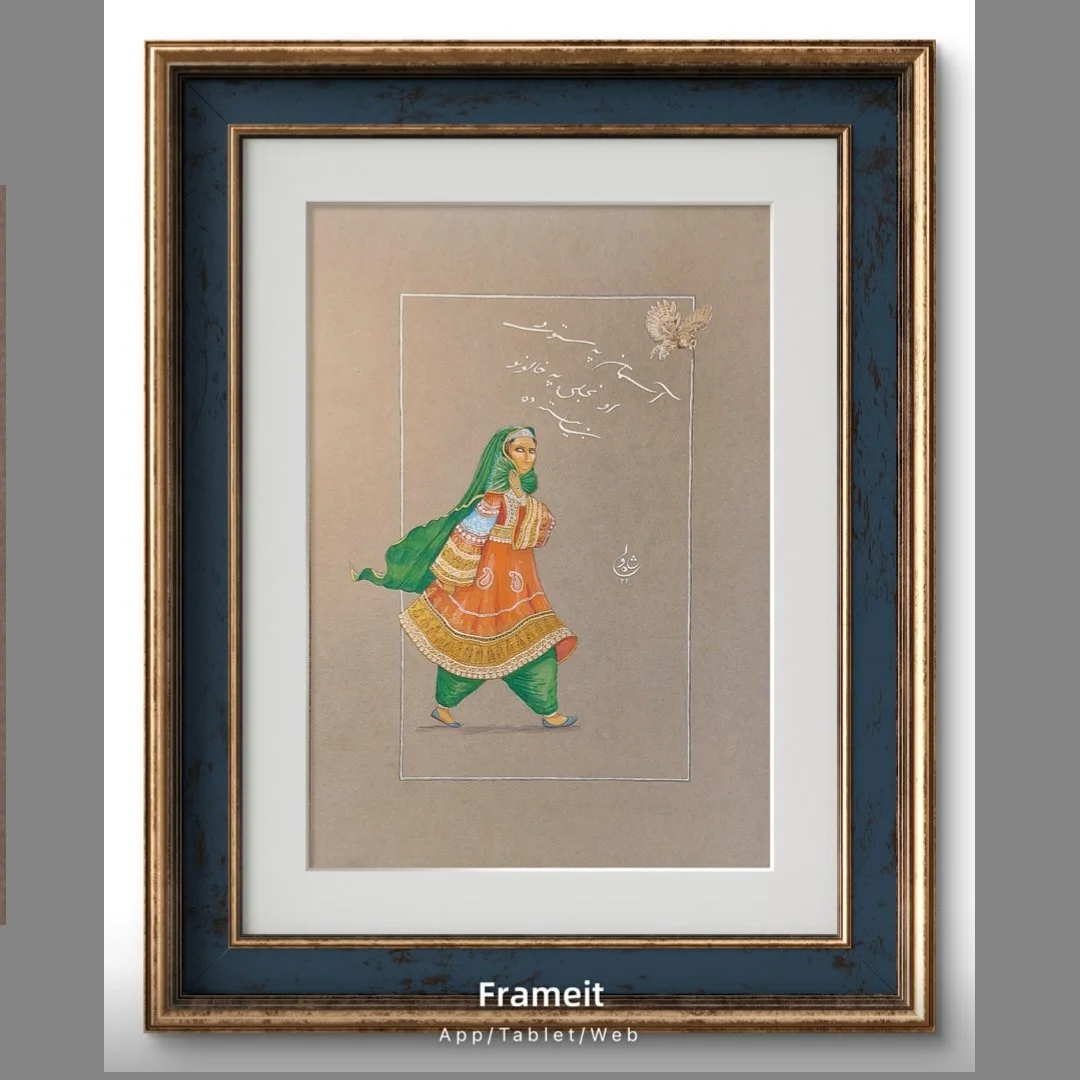 Image 6 of 6