Watercolour and gouache on grey mount board.
29.5cm x 21cm (A4)
The conclusion of an elephant-mounted Bengal tiger hunt during the time of the British Raj.
This captivating watercolor and gouache painting on mount board, titled "Regicide," transports you to the era of the British Raj in India. It depicts the dramatic conclusion of an elephant-mounted tiger hunt, a subject famously explored by 20th-century artist Charlie Johnson Payne, known as Snaffles. While Snaffles often focused on the sporting aspect, this artwork delves into a more complex narrative, highlighting both the undeniable beauty of the scene and the profound horror of a practice that saw around 80,000 tigers killed.
The title, "Regicide," referencing the murder of a monarch, feels fitting for the subject matter, alluding to the apex predator's fate. This piece, executed in a style reminiscent of vintage illustrations and documentary art, captures the romance and devastation of that colonial period. It serves as a poignant reminder of the impact of such activities, from which India's magnificent tiger population continues to recover.
Watercolour and gouache on grey mount board.
29.5cm x 21cm (A4)
The conclusion of an elephant-mounted Bengal tiger hunt during the time of the British Raj.
This captivating watercolor and gouache painting on mount board, titled "Regicide," transports you to the era of the British Raj in India. It depicts the dramatic conclusion of an elephant-mounted tiger hunt, a subject famously explored by 20th-century artist Charlie Johnson Payne, known as Snaffles. While Snaffles often focused on the sporting aspect, this artwork delves into a more complex narrative, highlighting both the undeniable beauty of the scene and the profound horror of a practice that saw around 80,000 tigers killed.
The title, "Regicide," referencing the murder of a monarch, feels fitting for the subject matter, alluding to the apex predator's fate. This piece, executed in a style reminiscent of vintage illustrations and documentary art, captures the romance and devastation of that colonial period. It serves as a poignant reminder of the impact of such activities, from which India's magnificent tiger population continues to recover.

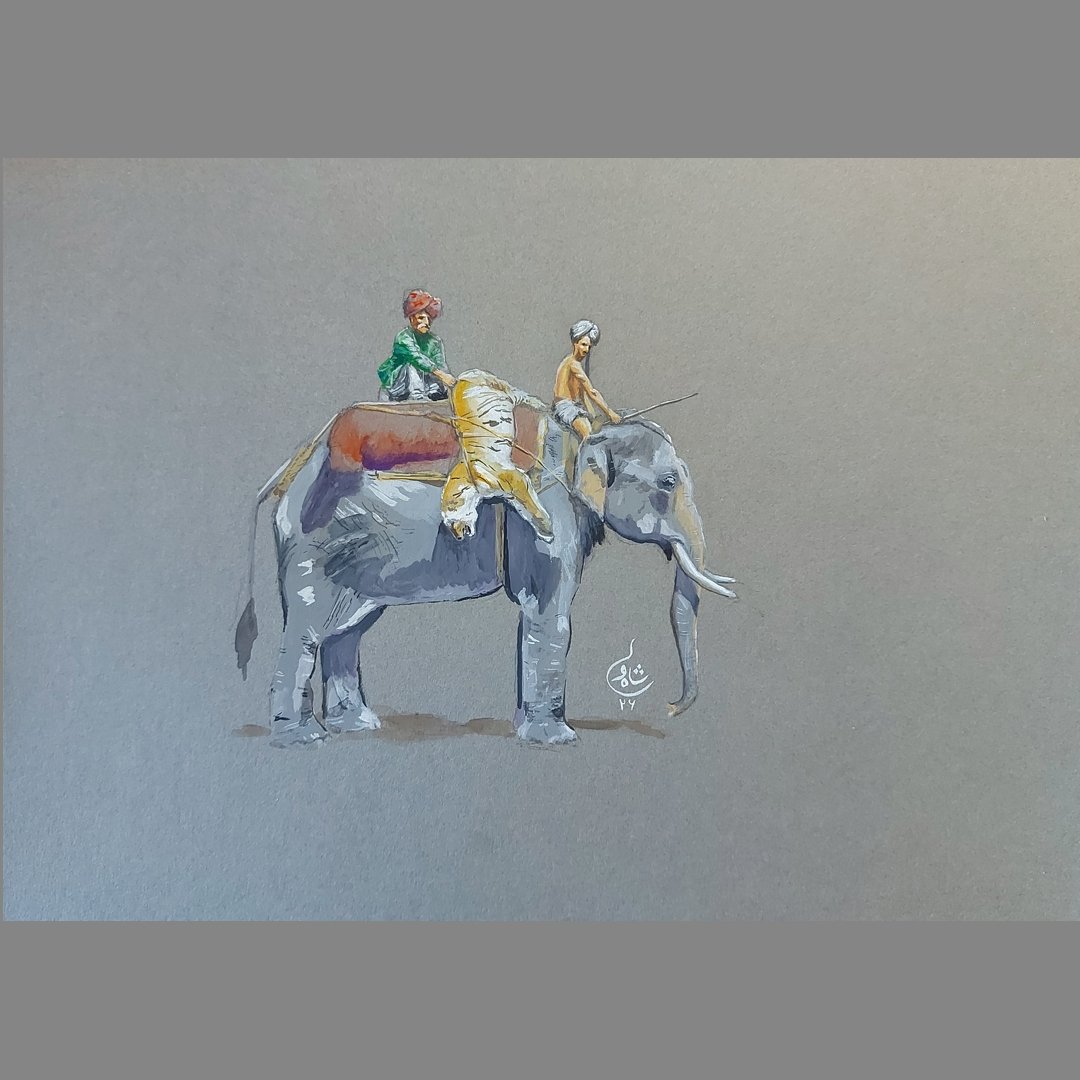 Image 1 of 6
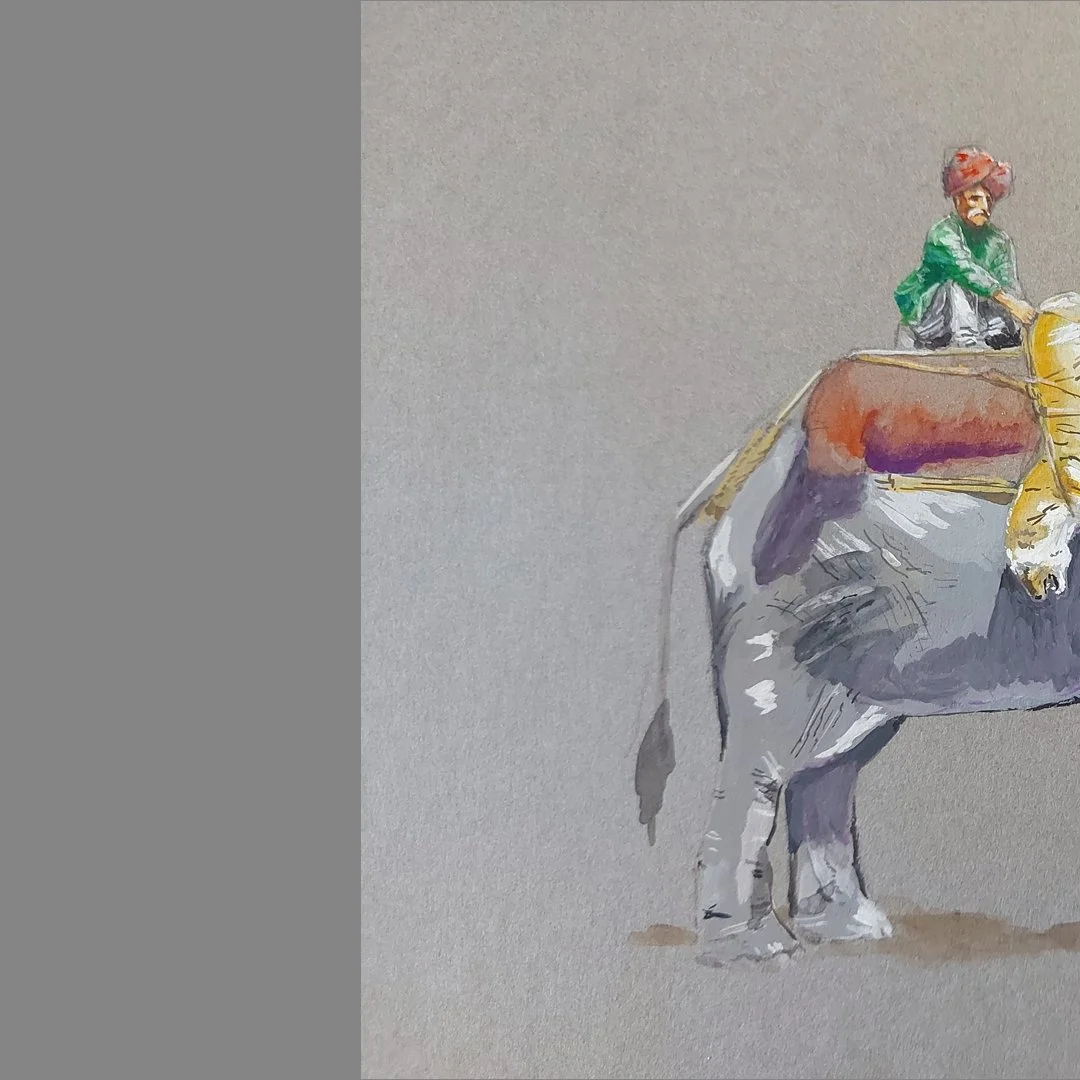 Image 2 of 6
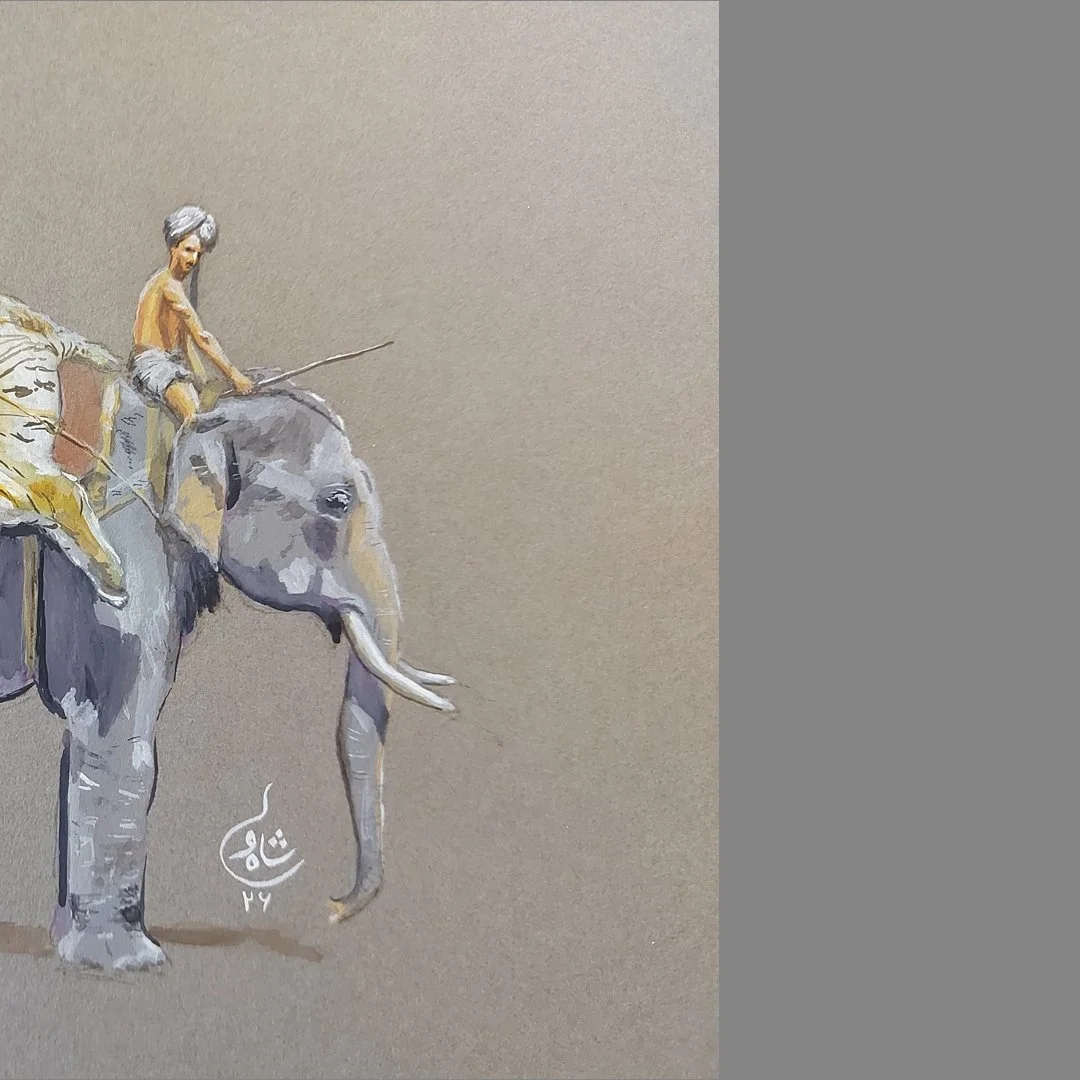 Image 3 of 6
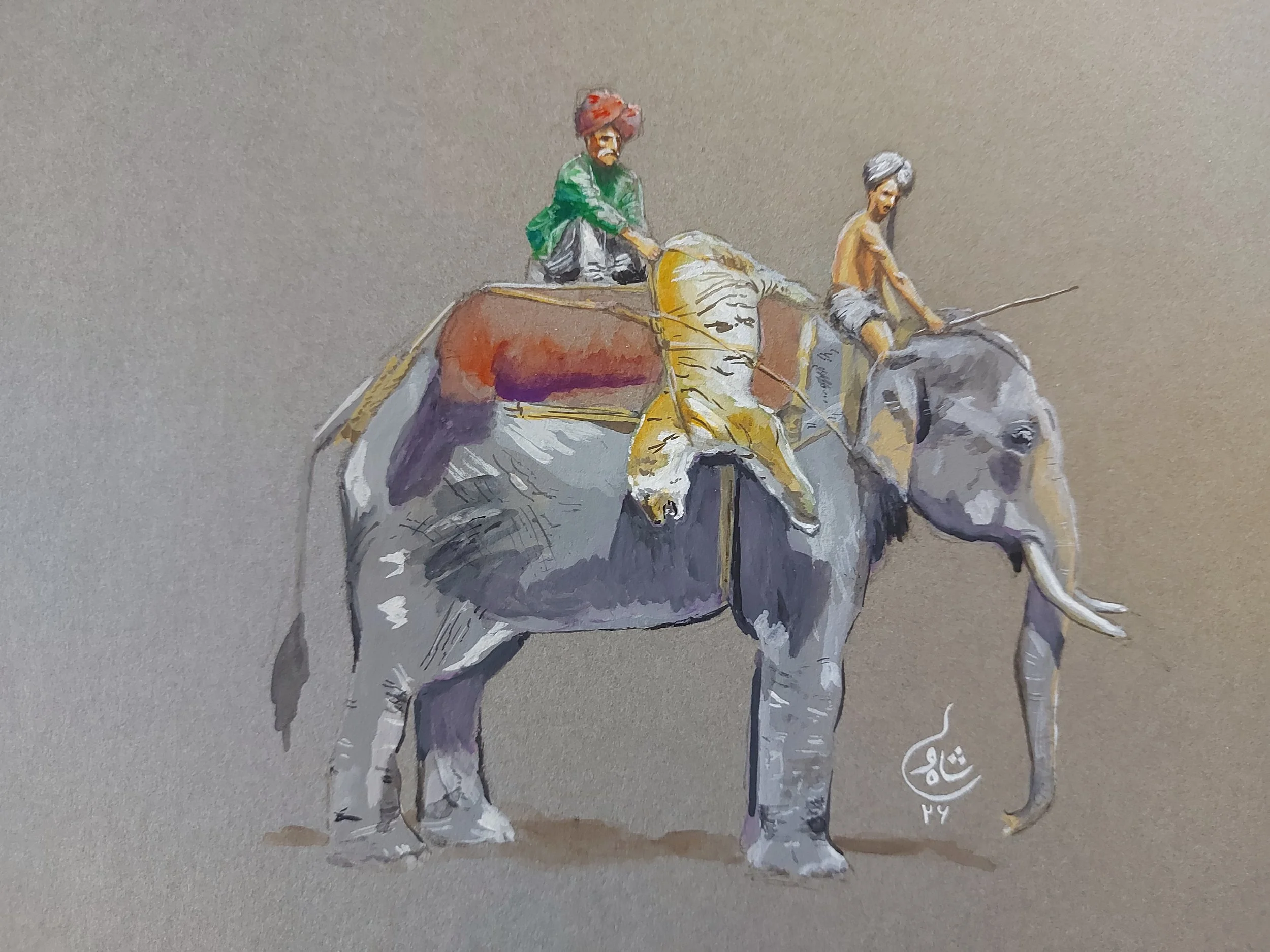 Image 4 of 6
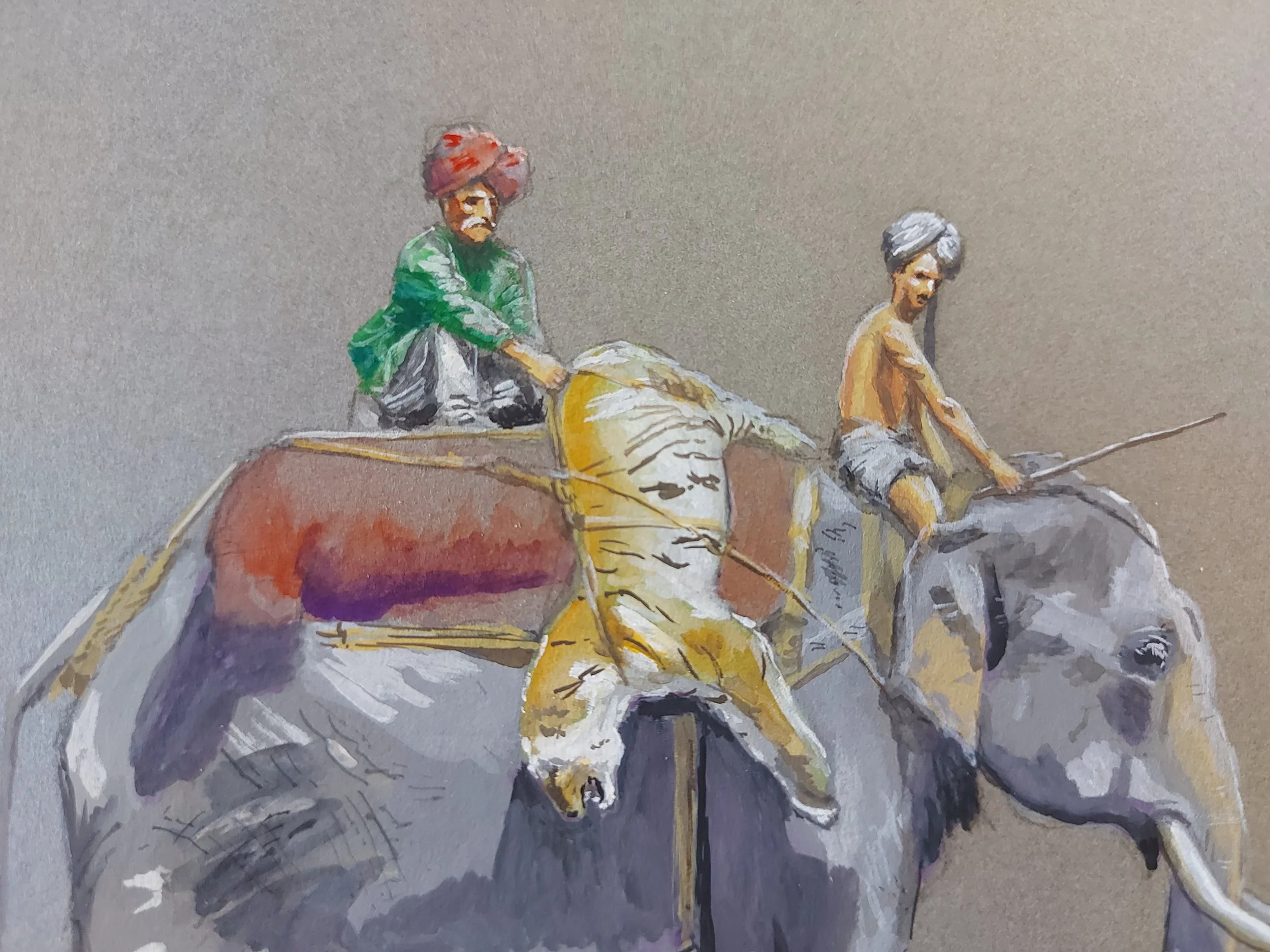 Image 5 of 6
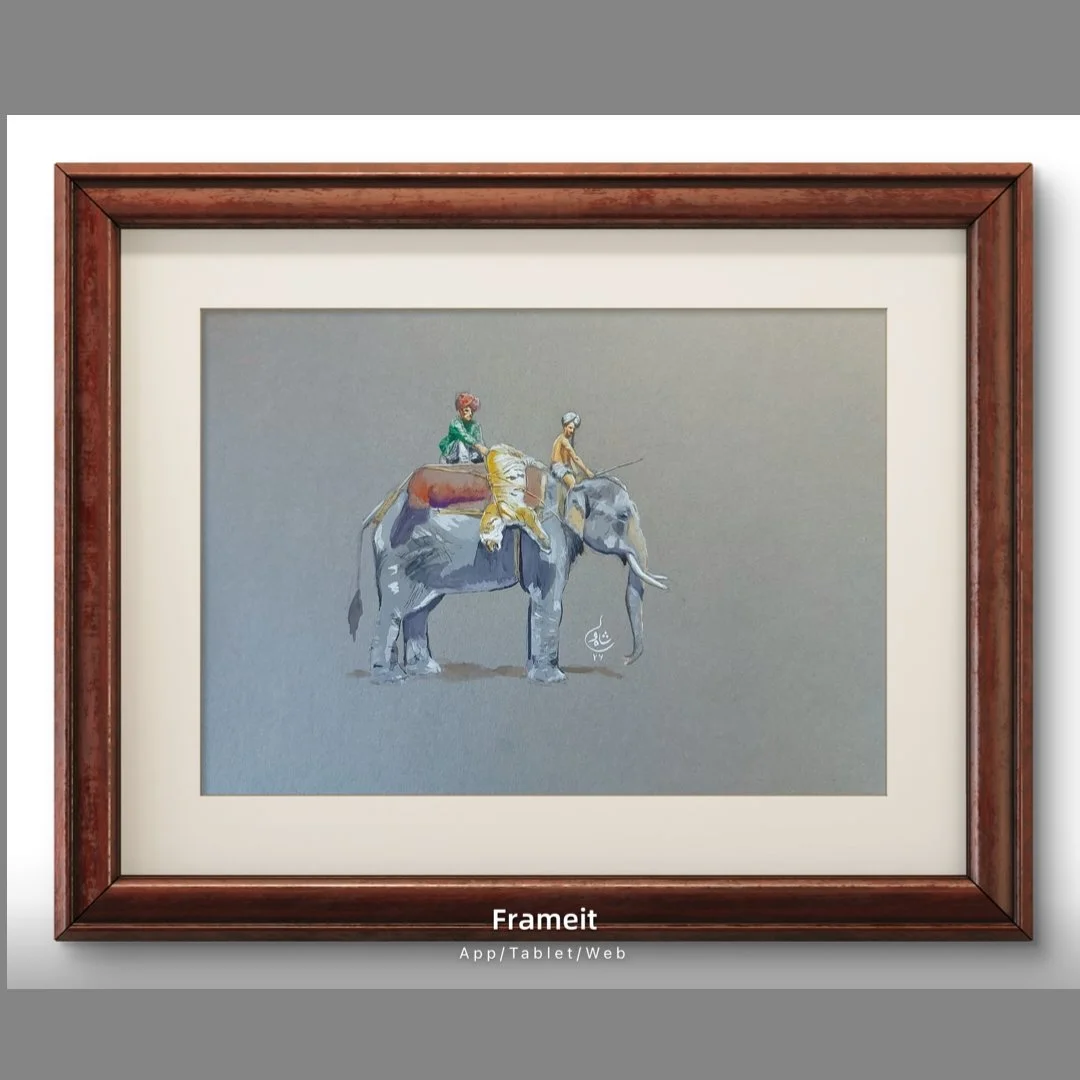 Image 6 of 6